 Skip to content
How Do Intercom Systems Work? A Complete Guide to Modern Intercom Technology
Intercom systems have evolved far beyond simple buzzers and wired door speakers. Today, they are intelligent communication platforms used in homes, offices, hospitals, apartment buildings, schools, and high-security facilities worldwide. From audio-only door entry systems to cloud-based video intercoms integrated with smartphones, intercom technology plays a critical role in communication, access control, and security.
This in-depth guide explains how intercom systems work, the technologies behind them, different types of intercoms, real-world applications, benefits, limitations, and future trends — all optimized for SEO and modern readers.
What Is an Intercom System?
An intercom system (short for intercommunication system) is a standalone or network-connected communication device that allows two or more people to talk to each other within a defined area. Unlike telephones, intercoms are typically local systems designed for quick, controlled communication.
Modern intercom systems are commonly used for:
- Visitor screening and access control
- Internal communication in buildings
- Emergency alerts
- Security monitoring
Intercoms can be audio-only, video-enabled, wired, wireless, or IP-based, depending on the application and infrastructure.
Read about access control & security systems integration.
The Basic Components of an Intercom System
While designs vary, most intercom systems share a common architecture:
Entry or Master Station
This is the main unit, often located at a door, gate, or reception area. It includes:
- Microphone
- Speaker
- Call button or touchscreen
- Camera (for video intercoms)
Substation or Indoor Unit
Installed inside a building, this allows occupants to:
- Receive calls
- Communicate with visitors
- Unlock doors remotely
Power Supply
Intercoms may be powered via:
- Dedicated power adapters
- Power over Ethernet (PoE)
- Batteries (wireless systems)
Communication Medium
This includes:
- Copper wiring
- Radio frequency (RF)
- Wi-Fi or Ethernet
- Cellular networks
Control Interface
Modern systems often include:
- Mobile apps
- Desktop dashboards
- Cloud platforms
How Traditional Wired Intercom Systems Work
Wired intercom systems are the foundation of modern intercom technology and are still widely used in buildings with existing infrastructure.
Signal Flow in Wired Intercoms
- A visitor presses the call button at the entry station
- An electrical signal travels through physical wiring
- The indoor unit rings or alerts the occupant
- Audio is transmitted via analog or digital signals
- The occupant responds using a microphone
- (Optional) A door strike is activated to grant access
Key Characteristics
- Uses copper or multi-core cables
- Highly reliable and stable
- Low interference
- Limited flexibility for expansion
Best Use Cases
- Apartment buildings
- Hospitals
- Schools
- Industrial facilities
How Wireless Intercom Systems Work
Wireless intercom systems eliminate the need for extensive cabling, making them ideal for retrofits and temporary installations.
Communication Methods
Wireless intercoms rely on:
- RF (radio frequency) signals
- Wi-Fi networks
- DECT technology
- Bluetooth (short range)
How Wireless Intercoms Operate
- A call is initiated at the entry station
- The signal is transmitted wirelessly
- The receiving unit decodes the signal
- Two-way communication is established
Advantages
- Easy installation
- Lower upfront costs
- Flexible placement
Limitations
- Susceptible to interference
- Limited range
- Dependence on signal strength
How Video Intercom Systems Work
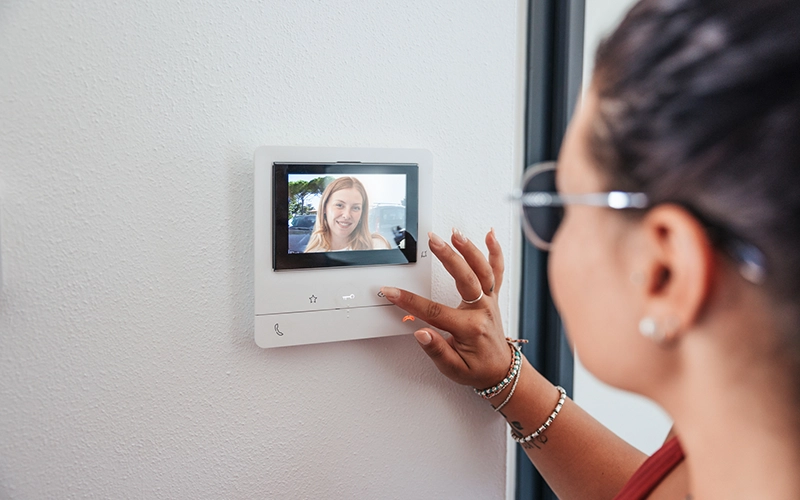
Video intercom systems combine audio communication with real-time video, allowing users to see who they are speaking with before granting access.
Key Components
- Camera at the entry station
- Display screen at the indoor unit or smartphone
- Audio input/output
- Video encoder and decoder
How Video Intercoms Function
- The camera captures live video
- Video is compressed and transmitted
- The receiving device displays the feed
- Two-way audio communication occurs
- Access decisions are made visually
Benefits
- Enhanced security
- Visitor verification
- Reduced unauthorized access
Video intercoms are now standard in residential buildings, offices, and gated communities.
How IP and Cloud-Based Intercoms Work
IP intercom systems represent the most advanced form of intercom technology.
What Is an IP Intercom?
An IP intercom uses Internet Protocol (IP) networks to transmit audio and video data over Ethernet or the Internet.
How IP Intercom Systems Work
- The intercom converts audio/video into digital data
- Data is transmitted over a LAN or WAN
- Calls are routed through a server or cloud platform
- End users receive calls on:
- Smartphones
- Tablets
- PCs
- Dedicated indoor units
Cloud-Based Intercoms
Cloud platforms provide:
- Remote access
- Data storage
- System management
- Firmware updates
Advantages
- Scalability
- Remote management
- Smartphone integration
- Multi-location support
Integration With Access Control and Security Systems
Modern intercoms are no longer standalone devices. They integrate seamlessly with broader security ecosystems.
Common Integrations
- Electronic door locks
- RFID card readers
- Biometric systems
- CCTV cameras
- Alarm systems
How Integration Works
- Intercom verifies identity (audio/video/credentials)
- An access control system grants or denies entry
- Security software logs events
- Video footage is stored for auditing
This integration creates a layered security approach, improving both safety and efficiency.
Intercom System Use Cases Across Industries
Residential Buildings
- Visitor screening
- Package delivery communication
- Remote door unlocking
Commercial Offices
- Reception automation
- Employee access management
- Emergency announcements
Healthcare Facilities
- Nurse call systems
- Patient communication
- Controlled access zones
Education
- Classroom communication
- Emergency lockdown alerts
- Visitor management
Industrial & High-Security Sites
- Restricted area access
- Perimeter communication
- Incident response coordination
Benefits of Modern Intercom Systems
Improved Security
Visual and audio verification reduces unauthorized access.
Operational Efficiency
Automates visitor handling and internal communication.
Convenience
Smartphone access allows remote interaction.
Scalability
Easily expand systems without major infrastructure changes.
Cost Savings
Reduces staffing needs and manual monitoring.
Challenges and Limitations
Despite their advantages, intercom systems have some challenges:
Technical Complexity
Advanced systems require IT expertise.
Network Dependence
IP intercoms rely on stable internet connectivity.
Cybersecurity Risks
Cloud-connected systems must be properly secured.
Upfront Investment
High-quality systems may have higher initial costs.
Installation and Maintenance Considerations
Installation Factors
- Building size and layout
- Wired vs wireless infrastructure
- Power availability
- Integration requirements
Maintenance Best Practices
- Regular firmware updates
- Network performance monitoring
- Camera and microphone testing
- Access log audits
Proper planning ensures long-term reliability and performance.
Future Trends in Intercom Technology
The intercom industry continues to innovate rapidly.
AI-Powered Intercoms
- Facial recognition
- Voice analysis
- Behavior detection
Mobile-First Intercoms
- Smartphone-only systems
- App-based visitor management
Smart Home & IoT Integration
- Voice assistants
- Automation rules
- Smart locks and sensors
Touchless and Contactless Systems
- QR codes
- Mobile credentials
- Motion-activated calling
Conclusion
So, how do intercom systems work? At their core, intercoms enable controlled, real-time communication — but modern systems go far beyond simple audio exchange. By combining audio, video, networking, cloud computing, and access control, today’s intercoms serve as intelligent security and communication hubs.
Whether installed in a home, office, hospital, or industrial facility, intercom systems enhance security, efficiency, and convenience. As technology continues to evolve, intercoms will play an even greater role in smart buildings and connected environments.
Understanding how intercom systems work empowers you to choose the right solution — one that fits your needs today and scales for tomorrow.
