
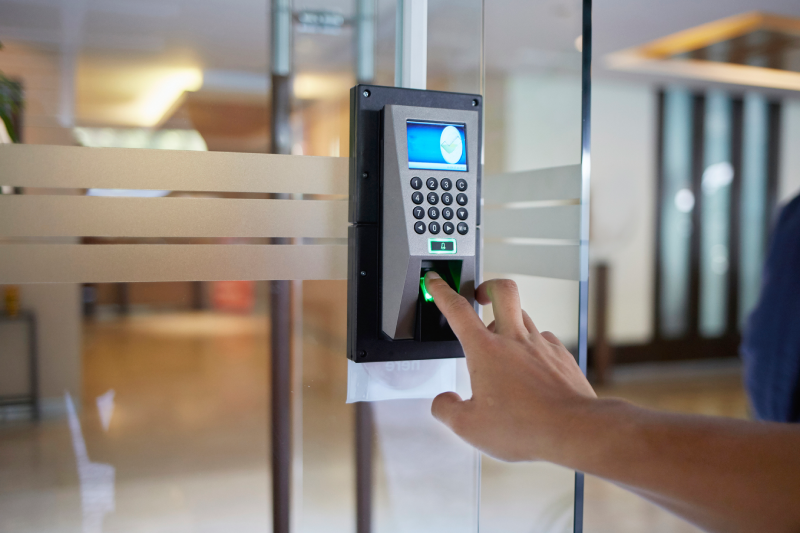
Understanding the Different Types of Access Control Systems
Not every commercial building secures its entrances the same way. A small office may only need to control access through a single door, while a healthcare facility, warehouse, or multi-tenant property may require different permission levels across dozens of entry points. Understanding the available types of access control systems helps businesses evaluate which technologies and access models best support their security objectives.
This guide explains the most common types of door access systems, the administrative models that govern user permissions, and the factors businesses should evaluate before implementing an access control solution.
What Is an Access Control System?
An access control system verifies a person’s credentials before allowing entry into a building, room, or secured area. Instead of relying solely on mechanical locks, electronic systems determine whether a user has permission to access a particular location.
Most commercial systems consist of:
- Credential readers
- Electronic locks
- Controllers
- Management software
- User credentials such as cards, mobile devices, PINs, or biometric identifiers
These components work together to manage access permissions while creating a record of authorized entry activity.
Common Types of Door Access Systems
Proximity Card Reader Systems
A proximity card reader authenticates a programmed access card or key fob before unlocking a secured door.
Many organizations choose this method because credentials can be issued, replaced, or revoked without changing physical locks. These systems also support scheduled access and activity logging.
Mobile Credentials
Mobile credential systems replace physical access cards with authorized smartphones.
Instead of distributing badges, administrators issue digital credentials that can be updated remotely when user permissions change.
Biometric Door Entry Systems
A biometric door entry system identifies users through physical characteristics such as fingerprints, facial recognition, iris scans, or hand geometry.
Because access depends on the individual rather than a credential that can be shared or misplaced, biometric authentication is commonly used for areas requiring stronger identity verification.
PIN and Keypad Systems
PIN-based systems authenticate users through a numeric access code entered on a keypad.
They are often installed where issuing individual credentials is unnecessary or where temporary access is required.
Cloud-Based Access Control
Cloud-managed systems allow administrators to configure permissions, schedules, credentials, and reports through secure online management software.
Organizations responsible for multiple buildings often use cloud administration to manage access from a centralized platform.
Integrated Access Control
Access control can also operate alongside other commercial security technologies.
Integration commonly includes:
- Commercial surveillance cameras
- Intrusion detection systems
- Intercoms
- Visitor management platforms
Connecting these systems provides a broader view of facility activity from a single security environment.
Administrative Access Control System Categories
The technologies used to unlock a door differ from the policies used to determine who receives access. Three widely recognized administrative models are DAC, MAC, and RBAC.
Discretionary Access Control (DAC)
Discretionary Access Control (DAC) allows administrators or resource owners to decide which users receive access permissions.
This approach provides flexibility but depends on consistent administration.
Mandatory Access Control (MAC)
Mandatory Access Control (MAC) applies centrally enforced security policies based on predefined classifications rather than individual decisions.
Because permissions cannot be modified by end users, MAC is commonly associated with environments requiring strict control.
Role-Based Access Control (RBAC)
Role-Based Access Control (RBAC) assigns permissions according to an employee’s role instead of configuring every user individually.
For example:
- Reception staff may access public office areas.
- IT personnel may access server rooms.
- Management may receive broader building permissions.
Using predefined roles simplifies administration as organizations expand.
How Businesses Evaluate Access Control Methods
Selecting among different access control methods for business involves more than comparing credential types.
Common evaluation factors include:
- Number of secured entrances
- User volume
- Visitor access requirements
- Administrative workflow
- Integration requirements
- Remote management capabilities
- Regulatory or organizational security policies
These considerations help determine which combination of technologies best fits the facility.
Common Selection Mistakes
Prioritizing Hardware Over System Management
Readers and locks are only part of the solution. Credential administration, reporting, software, and ongoing management have an equally significant impact on day-to-day operation.
Choosing a System That Limits Future Expansion
Organizations frequently add employees, departments, or secured areas over time. Selecting a system that accommodates these changes can reduce future replacement costs.
Treating Security Systems as Separate Technologies
When access control, surveillance, intrusion detection, and intercoms operate independently, administrators often have to manage multiple interfaces. Integration can simplify investigation and administration.
Leaving Permissions Unchanged
Access rights should be reviewed whenever employees change roles or leave the organization. Regular updates help ensure permissions remain aligned with current responsibilities.
Frequently Asked Questions About Types of Access Control Systems
What is the best access control system for a small business?
There isn’t a single best solution — the right system depends on how your business manages people, spaces, and daily operations.
A smaller office may only need to secure a few entrances, while businesses with restricted work areas, multiple departments, or frequent visitors often require more advanced access management. Evaluating building layout, user volume, and future operational needs helps determine the most appropriate access control system.
Can different types of access control systems be used in the same building?
Yes. Many commercial buildings use multiple authentication methods within one system.
For example, employees may use proximity card readers, visitors may receive temporary credentials, and sensitive areas may require a biometric door entry system. Combining different credential types allows businesses to apply appropriate security levels throughout the facility.
Do access control systems work for multi-building or multi-location businesses?
Yes. Many commercial platforms are designed to manage multiple locations from a single system.
Organizations with offices, warehouses, or facilities across Michigan can often manage users, permissions, and access schedules through centralized software, reducing the need for separate administration at each site.
Can an access control system be expanded later?
Many commercial systems are designed to accommodate additional doors, users, and buildings.
Businesses planning renovations, office expansions, or new locations often benefit from choosing a scalable platform that can grow without replacing the entire system.
What’s the difference between authentication and authorization in an access control system?
Authentication confirms who a person is, while authorization determines what they are allowed to access.
For example, a card reader may successfully identify an employee, but the system still checks whether that individual has permission to unlock a particular door based on the organization’s configured access rules.
Can access control systems help create an audit trail?
Yes. Most commercial systems record access events for authorized credentials.
These records can help businesses review when doors were accessed, identify which credential was used, and support internal security reviews when questions arise.
Can access control systems integrate with existing commercial security systems?
In many cases, yes.
Commercial access control systems are often designed to integrate with surveillance cameras, intercoms, and intrusion detection systems, allowing businesses to manage multiple security technologies more efficiently through a connected solution.
Who should businesses contact for commercial access control systems in the Great Lakes Bay Region?
Businesses throughout Saginaw, Bay City, Midland, and the surrounding Great Lakes Bay Region can contact Honor Security for professionally designed and installed commercial access control systems.
Honor Security designs and installs commercial access control systems for businesses throughout Saginaw, Bay City, Midland, and the surrounding Great Lakes Bay Region. Whether planning a new installation, replacing an existing system, or expanding access management across multiple facilities, our team provides solutions tailored to each property’s operational and security requirements.