 Skip to content
Halo Smart Sensor Vape Detector
Halo Smart Sensor Vape Detector Installed by Honor Security
Honor Security installs the Halo Smart Sensor vape detector for schools, healthcare facilities, hotels, multifamily housing, and commercial buildings, with full deployment including site planning, network integration, and ongoing service.
Call 989-401-7070 or request a Halo deployment consultation today.
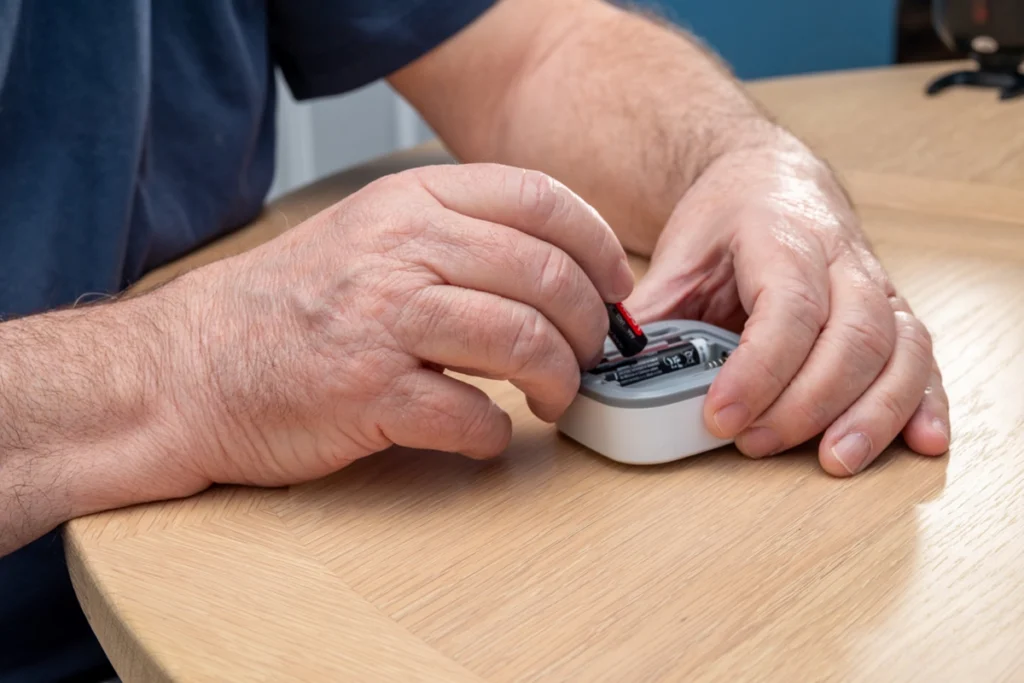
Honor Security is a commercial security system integrator headquartered at 141 Harrow Lane, Suite 1, Saginaw, MI 48638, and an authorized installer of the Halo Smart Sensor across Michigan. The Halo Smart Sensor, originally from IPVideo Corporation and now part of the Motorola Solutions family alongside Avigilon, is the leading IoT vape detector deployed in thousands of school districts and commercial buildings worldwide.
Honor Security deploys Halo as part of our additional security technologies portfolio, sitting alongside environmental monitoring, temperature and humidity monitoring, and broader surveillance camera and access control systems. For Saginaw-area buyers specifically, we maintain a dedicated Halo Smart Sensor 3C installation in Saginaw, MI page.
This page is the non-geo product hub covering Halo deployment for any commercial facility across Michigan.
What Is the Halo Smart Sensor Vape Detector?
The Halo Smart Sensor is an IoT device that detects vaping, THC use, smoke, and harmful chemicals while simultaneously monitoring air quality, occupancy, gunshots, aggression, and spoken keyword alerts. Designed for areas where cameras and microphones would violate privacy expectations, including school bathrooms, locker rooms, hospital rooms, hotel rooms, and dorms, Halo provides real-time alerts to designated personnel without capturing video, audio, or any personally identifiable information.
The Halo vape detector is manufactured by IPVideo, now part of Motorola Solutions, and integrates with existing commercial security systems including video management platforms, access control, and intrusion detection. As of current deployments, Halo is in use in thousands of school districts nationwide.
Modern Halo product variants include:
- Halo 3C — the standard third-generation smart sensor with vape, THC, air quality, gunshot, aggression, and keyword detection
- Halo 3C-PC — adds people counting and occupancy detection without cameras
- Halo 2C — earlier generation still in active deployment at thousands of facilities
Why Schools and Commercial Facilities Deploy Halo Vape Detectors
According to the CDC’s 2024 National Youth Tobacco Survey, 5.9 percent of U.S. middle and high school students currently use e-cigarettes, representing approximately 1.63 million students. Among high school students alone, current e-cigarette use sits at 7.8 percent. Even with significant declines from the 2019 peak, youth vaping remains a daily operational issue for school administrators across the country.
Beyond schools, vape detection is increasingly deployed in:
- Healthcare facilities where patient rooms and behavioral health environments require privacy-respecting monitoring
- Hotels and hospitality where guest rooms cannot use cameras or microphones but vape policies still need enforcement
- Multifamily housing and assisted living for resident safety and indoor-air-quality compliance
- Commercial offices and warehouses monitoring restrooms, break rooms, and other privacy-sensitive zones
- Correctional facilities where contraband detection matters but privacy rules apply
The common buyer requirement: detect a real safety or policy violation in a privacy-protected space without deploying video or audio recording.
What the Halo Smart Sensor 3C Detects
- Vape and e-cigarette use including nicotine vaping
- THC vape detection for cannabis vape products
- Vape masking attempts when users try to hide vape use with sprays, deodorants, or perfumes
- Smoke from cigarettes, cigars, and other combustibles
- Gunshot detection with patent-pending dual authentication for gunshot identification at a 25-foot radius (approximately 2,000 square feet of coverage), per Halo manufacturer specifications
- Aggression and shouting through sound-level analysis without recording audio
- Spoken keyword alerts for emergency keywords like “help” or specific safety phrases
- Air quality monitoring including CO, CO2, NO2, and VOC levels
- Temperature and humidity environmental conditions
- Occupancy and people counting (3C-PC variant) up to 9 individuals in a 196 square foot space when mounted at 9 feet
- Motion detection and panic button support (3C generation)
Critically, Halo accomplishes all of this without cameras, audio recording, or PII capture, which is what makes it deployable in restrooms, locker rooms, dorms, and patient rooms.
Where Halo Smart Sensors Are Typically Deployed
Schools (K-12 and Higher Education)
The largest single buyer segment. Vape detection sensor for schools deployments concentrate in:
- Student restrooms and bathrooms — by far the most common deployment zone, since cameras are prohibited
- Locker rooms — where vaping, bullying, and aggression all intersect as safety concerns
- Stairwells and isolated corridors — common vaping locations between classes
- Dorm rooms (higher education) — in-room vape and smoke detection
- Gym storage and equipment rooms — secondary spaces students access between activities
Healthcare Facilities
Hospital rooms, behavioral health units, mental health treatment centers, and assisted living facilities deploy Halo for in-room safety monitoring without compromising patient privacy.
Hotels and Hospitality
Guest rooms with vape and smoke detection alert hotel management to policy violations before damage occurs, supporting cleaning fee enforcement and indoor-air-quality protection for the next guest.
Multifamily Housing
Apartment complexes, condos, and assisted living facilities deploy Halo for vape detection in common-area restrooms, fitness centers, and stairwells where indoor smoking and vaping policies need enforcement without cameras.
Corporate and Commercial Buildings
Office restrooms, employee break rooms, and warehouse facilities use Halo to monitor air quality, vape compliance, and occupancy without invading employee privacy.
Halo Smart Sensor 2C vs 3C vs 3C-PC Comparison
Feature | Halo 2C | Halo 3C | Halo 3C-PC |
Vape and THC detection | Yes | Yes | Yes |
Vape masking detection | Yes | Yes | Yes |
Smoke detection | Yes | Yes | Yes |
Gunshot detection | Yes | Yes (improved algorithm) | Yes (improved algorithm) |
Aggression / sound level | Yes | Yes | Yes |
Spoken keyword alerts | Yes | Yes | Yes |
Air quality (CO, CO2, NO2, VOC) | Yes | Yes | Yes |
Temperature and humidity | Yes | Yes | Yes |
Multicolored LED indicators | Limited | Yes | Yes |
Motion detection | No | Yes | Yes |
Panic button (IPANIC) support | Limited | Yes | Yes |
Easier installation (single cable for two units) | No | Yes | Yes |
People counting and occupancy | No | No | Yes (up to 9 in 196 sq ft) |
How Honor Security Deploys the Halo Smart Sensor
Site Assessment
Effective Halo deployment is location-dependent. We conduct a site walkthrough to identify problem areas (high-traffic restrooms, isolated locker rooms, gunshot-coverage zones for educational settings) and recommend sensor placement based on coverage radius, mounting height, ventilation patterns, and existing infrastructure.
Network Integration
Halo sensors are PoE-powered IoT devices that need correct VLAN configuration, network bandwidth allocation, and integration with the facility’s existing IT environment. We handle network planning, IT coordination, and any required infrastructure upgrades.
Platform Integration
Halo integrates with existing video management platforms, access control systems, and intrusion detection. Honor Security ties Halo alerts into broader security workflows so a vape detection event automatically tags corresponding access control logs, camera footage from hallway approaches, and notification dispatch to designated staff.
For schools, this typically means an alert routes to administration, security, and the school resource officer in seconds rather than minutes.
Tuning and Threshold Management
The most common reason Halo deployments fail is poor tuning. Sensitivity thresholds need to match the actual environment (humidity in showers, aerosol use in restrooms, foot-traffic patterns) to avoid false positives that erode staff trust. Honor Security tunes each sensor to its specific environment and adjusts thresholds based on the first 30 to 60 days of operational data.
Ongoing Service and Software Updates
Halo sensors require firmware updates, sensor calibration over time, and periodic threshold re-tuning as building use patterns change. Honor Security’s preventative maintenance program covers all of this. Active customers receive a 10 percent discount on scheduled PM service.
Why Choose Honor Security for Halo Deployment
Authorized Halo installer. Honor Security is an authorized installer of the Halo Smart Sensor product line, with deployment experience across Michigan commercial facilities.
Integrated security capability. Halo is most effective when integrated with broader security infrastructure. Honor Security ties Halo into surveillance camera systems, access control, and intrusion detection under one accountable service contract.
Honest tuning and ongoing service. Most installer relationships end at the install. We commit to the 30 to 60 day post-install tuning period that actually makes Halo work in real environments.
Decade-plus client relationships. Verified Honor Security clients describe long-term partnerships:
“We have been extremely pleased and satisfied with your excellent service for well over a decade.” — Don K.
“Honor Security was quick to respond to our business needs and was able to get our access control systems operational again in a timely manner.” — Patrick L.
Michigan-based service team. Our Saginaw HQ at 141 Harrow Lane provides direct service across the Great Lakes Bay Area and Michigan, with no out-of-state dispatch routing.
Service of existing Halo deployments. Honor Security services Halo sensors regardless of who installed the original system, including firmware updates, sensor replacement, threshold re-tuning, and integration with new platforms.
Costly Mistake School Districts and Facilities Make with Vape Detection
The most expensive mistake is buying sensors based on per-unit price without budgeting for the tuning and integration work that makes them effective. A poorly tuned vape detection sensor for schools generates so many false positives that staff stop responding to alerts within a few weeks. The deployment then sits unused on the ceiling generating dashboard data nobody reads. Proper tuning during the first 30 to 60 days, combined with ongoing threshold management, separates effective deployments from expensive shelfware.
The second costly mistake is installing vape detection without integrating it into the school’s broader security workflow. An isolated vape alert with no automatic camera review of the corridor approach and no coordinated staff response loses most of its operational value.
Key Halo Smart Sensor Facts
- Honor Security HQ: 141 Harrow Lane, Suite 1, Saginaw, MI 48638
- Service hours: Monday through Friday, 8:00 AM to 5:00 PM
- Direct line: 989-401-7070
- Halo manufacturer: IPVideo Corporation, now part of Motorola Solutions
- Current product variants: Halo 3C, Halo 3C-PC, Halo 2C
- Privacy compliance: no cameras, no audio recording, no PII capture
- US middle and high school current e-cigarette use (2024): 5.9 percent, approximately 1.63 million students, per the CDC
- US high school current e-cigarette use (2024): 7.8 percent, approximately 1.21 million students, per the CDC
- Halo 3C-PC people counting capacity: up to 9 individuals in 196 square feet when mounted at 9 feet
- Halo gunshot detection coverage: 25 foot radius (approximately 2,000 square feet) per Halo manufacturer specifications
- Halo is currently deployed in thousands of school districts worldwide
Halo Smart Sensor Vape Detector FAQs
Does the Halo vape detector work in school bathrooms?
Yes. Halo is specifically designed for school bathrooms and other privacy-sensitive areas where cameras and microphones cannot be deployed. The sensor does not record video or audio and does not capture any personally identifiable information. Bathroom and locker room deployments are the most common Halo use case in K-12 schools.
Can the Halo Smart Sensor detect THC and cannabis vaping?
Yes. The Halo Smart Sensor detects nicotine vaping, THC and cannabis vaping, vape masking attempts (using sprays or perfumes to hide vape use), smoke from combustibles, and a range of air quality threats. THC detection is one of Halo’s core capabilities and is part of the standard 3C product.
What is the difference between the Halo 2C and Halo 3C?
The Halo 3C is the current third-generation product with improved gunshot detection algorithms, multicolored LED indicators, motion detection, IPANIC button support, and easier installation including the ability to power two sensors with a single cable run. The Halo 2C remains in active deployment but lacks the 3C generation features. New deployments default to 3C or 3C-PC.
Does Halo record audio or video?
No. The Halo Smart Sensor does not record audio, does not record video, and does not capture any personally identifiable information. It detects vape chemicals, air quality changes, sound levels (without recording the sound itself), and other environmental data, sending alerts based on threshold events. This privacy architecture is what allows Halo to be deployed in restrooms, locker rooms, hospital rooms, and dorms.
How does Halo detect gunshots without recording audio?
Halo uses a patent-pending dual-authentication algorithm that analyzes frequency, sound patterns, and percussion characteristics to identify gunshot events without recording the actual audio. Coverage is approximately 360-degree at a 25-foot radius covering nearly 2,000 square feet, per Halo manufacturer documentation.
How much does a Halo Smart Sensor cost?
Halo Smart Sensor pricing varies by model and quantity. Per-unit hardware cost typically ranges from approximately $700 to $1,200 depending on model and distributor, with installation, network configuration, platform integration, and ongoing service additional. Honor Security provides project-specific quotes after a site walkthrough that account for sensor count, mounting requirements, network infrastructure, and integration scope.
Can Halo integrate with our existing video management and access control systems?
Yes. Halo is designed to integrate with existing commercial security platforms including video management software, access control, and intrusion detection. Honor Security configures Halo alerts to coordinate with adjacent surveillance cameras and access control so that a vape detection event automatically tags corresponding hallway camera footage and entry logs.
Does Halo work for non-school facilities like hospitals or hotels?
Yes. While K-12 schools are the largest single buyer segment, Halo is widely deployed in healthcare facilities, hospitality, multifamily housing, assisted living, corporate offices, and other commercial environments where privacy-respecting monitoring is required. The detection capabilities and privacy architecture are the same across markets.
Michigan Service Coverage
Honor Security installs the Halo Smart Sensor vape detector across the Great Lakes Bay Area and throughout Michigan. Primary coverage includes Saginaw, Saginaw Charter Township, Bay City, Midland, Frankenmuth, Bridgeport, Birch Run, Auburn, and Freeland. Extended coverage includes Flint, Mt Pleasant, Owosso, and additional Michigan commercial and educational markets statewide.
Deploy the Halo Smart Sensor in Your Facility
Vape detection only works when the sensors are placed correctly, tuned to your environment, integrated with your broader security workflow, and serviced over time. Talk to a Michigan-based commercial security integrator about a Halo deployment that actually performs.
Call 989-401-7070 or book a Halo Smart Sensor consultation. Honor Security installs the Halo Smart Sensor vape detector for Michigan schools, healthcare facilities, hotels, multifamily housing, and commercial buildings, with site planning, network integration, platform connection, and ongoing service from a Saginaw-based team.
