
Understanding Biometric Access Control Systems for Commercial Security
Controlling access to restricted areas is about more than issuing keys or access cards. For some businesses, confirming that the person requesting entry is the authorized individual is an equally important part of their security strategy. Biometric access control systems use unique physical characteristics to verify identity before granting access, providing an additional layer of authentication beyond traditional credentials.
From office buildings and healthcare facilities to manufacturing sites and data-sensitive environments, businesses evaluate biometric technology when identity verification plays a significant role in protecting people, assets, or restricted spaces. This guide explains how biometric security for business works, the different technologies available, and the commercial environments where biometric authentication is commonly considered.
What Are Biometric Access Control Systems?
Biometric access control systems authenticate an individual by comparing a unique biological characteristic with information stored within the access control platform. Instead of relying solely on a key, access card, or PIN, the system verifies that the person requesting entry matches the authorized biometric credential.
A commercial biometric solution typically includes:
- Biometric reader
- Door controller
- Electronic locking hardware
- Access control software
- User credential database
Once authentication is successful, the system grants access according to the user’s assigned permissions.
Common Types of Biometric Entry Systems for Commercial Buildings
Fingerprint Door Access System
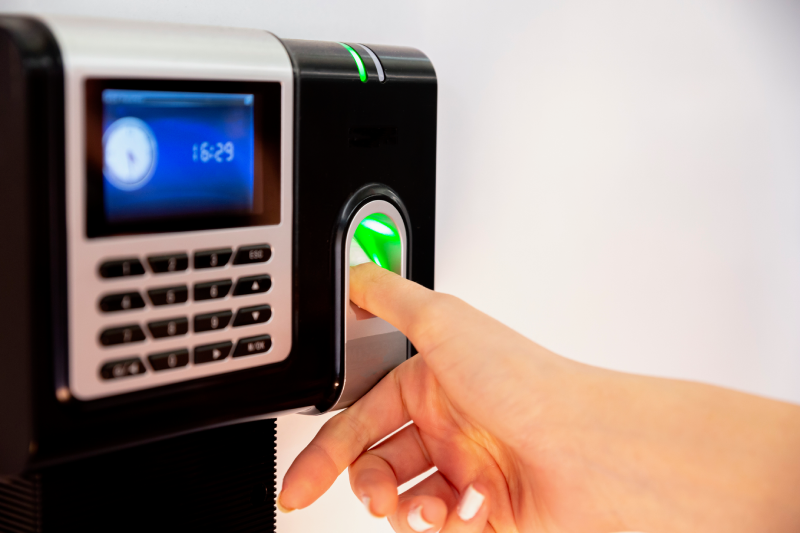
A fingerprint door access system identifies authorized users by scanning fingerprint patterns before unlocking a secured door. A commercial fingerprint reader is commonly installed at entrances where businesses want to strengthen identity verification without relying solely on physical credentials.
Fingerprint authentication is widely recognized because it provides a straightforward method of verifying individual identity while reducing reliance on physical credentials.
Facial Recognition Access Control
Facial recognition access control uses facial characteristics to compare a user’s identity with an authorized profile stored within the system.
This method may be considered for commercial environments where touch-free authentication is preferred or where organizations want to minimize reliance on physical credentials.
Iris Recognition
An iris scan security door system verifies identity by analyzing the unique patterns within a person’s iris.
Because iris patterns are highly distinctive, this technology is often associated with environments requiring elevated identity verification.
Benefits of Biometric Security for Business
Identity Verification
Unlike cards or key fobs, biometric credentials are directly linked to an individual. This can reduce the likelihood of shared or misplaced credentials being used to gain authorized entry.
Reduced Credential Administration
Organizations using biometric authentication may spend less time replacing lost cards or reissuing credentials because identity is verified through biometric characteristics rather than physical access devices.
Improved Access Management
Biometric authentication allows organizations to manage user permissions while maintaining detailed records of authorized access events.
These records can support internal security reviews and operational oversight.
Supports Multi-Factor Authentication Entry
Many commercial organizations combine biometric authentication with another credential, such as a card or PIN, creating multi-factor authentication entry for selected doors or restricted areas.
Using multiple authentication methods can provide an additional level of verification where organizational security policies require it.
Business Use Cases for Biometric Access Control Systems
Depending on operational requirements, organizations may evaluate a commercial biometric entry system for individual secured areas or as part of a broader access control strategy.
- Healthcare facilities
- Manufacturing facilities
- Corporate offices
- Warehouses
- Research environments
- Commercial buildings with restricted-access areas
The appropriate solution depends on the building’s security objectives, access policies, and administrative requirements.
Biometric Time Attendance System Integration
Some organizations integrate biometric authentication with a biometric time attendance system to verify employee identity during clock-in and clock-out processes.
Whether this functionality is appropriate depends on the organization’s workforce policies, attendance procedures, and the capabilities of the selected platform.
Considerations Before Implementing Biometric Access Control Systems
Before selecting a biometric solution, businesses should evaluate:
- Number of secured entrances
- Number of authorized users
- Authentication requirements
- Existing access control infrastructure
- Integration with commercial security technologies
- Administrative policies
- Applicable privacy or regulatory considerations
Evaluating these factors helps determine whether biometric authentication aligns with the organization’s overall security strategy.
Can Biometric Access Control Systems Work With Other Security Technologies?
Many commercial access control platforms support integration with compatible security technologies.
Depending on the selected platform, integration may include:
- Commercial surveillance cameras
- Intrusion detection systems
- Intercom systems
- Visitor management platforms
Some organizations also implement biometric authentication alongside card readers or PIN credentials to create layered access verification for selected areas.
Frequently Asked Questions About Biometric Access Control Systems
Which businesses benefit most from biometric access control systems?
Businesses that manage restricted areas, sensitive information, valuable assets, or regulated environments often evaluate biometric access control systems as part of their security strategy. Healthcare facilities, manufacturing plants, corporate offices, research facilities, and warehouses are among the commercial environments where biometric authentication may be considered.
Can biometric access control systems be used with key cards or PINs?
Yes. Many commercial access control platforms support multiple authentication methods. Businesses may combine biometric verification with access cards, PINs, or other credentials to create multi-factor authentication entry for selected doors or high-security areas.
What should businesses consider before installing a fingerprint door access system?
Before selecting a fingerprint door access system, businesses should evaluate the number of users, access policies, existing security infrastructure, environmental conditions, and compatibility with their current access control platform. These factors help determine whether fingerprint authentication is the right fit for the facility.
Can biometric access control systems integrate with existing commercial security systems?
Many commercial access control platforms support integration with compatible surveillance cameras, intrusion detection systems, intercoms, and visitor management solutions. Available integration options depend on the manufacturer and the capabilities of the selected system.
How much do biometric access control systems cost?
The cost of biometric access control systems depends on factors such as the number of secured doors, biometric readers, electronic locking hardware, software licensing, and installation complexity. Many commercial projects begin at approximately $1,500 to $5,000 per door, although larger or more complex installations may require a greater investment. A professional site assessment provides the most accurate cost estimate.
Are biometric access control systems scalable as a business grows?
Many commercial systems are designed to support additional users, doors, and facilities as operational requirements change. The level of scalability depends on the selected access control platform and how the system is configured during implementation.
Do biometric access control systems help improve employee accountability?
They can. Because biometric credentials are linked to an individual user, businesses may gain more reliable access records than systems that rely solely on shared PINs or transferable credentials. How those records are used depends on each organization’s security policies and operational procedures.
How do businesses choose between card access and biometric access control?
The choice depends on the level of identity verification a facility requires and how access is managed on a day-to-day basis. Card-based credentials are often selected for convenience and ease of administration, while biometric access control systems may be evaluated where confirming an individual’s identity is a higher priority. Many commercial access control systems also support both authentication methods, allowing businesses to apply different levels of security throughout the same facility.
Honor Security designs and installs commercial access control systems for businesses throughout Saginaw, Bay City, Midland, and the surrounding Great Lakes Bay Region. Whether you’re securing a single facility or planning a broader access management strategy, our team can help you implement a commercial access control solution designed around your business, your building, and your security objectives.