
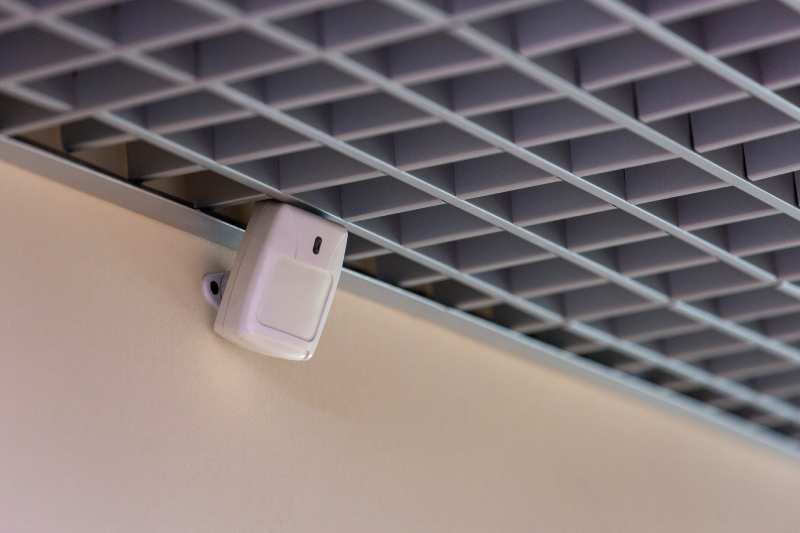
Understanding How a Motion Sensor Works in Commercial Security
A commercial intrusion detection system is only as effective as its ability to recognize unusual movement without generating unnecessary alerts. Understanding how does motion sensor work helps businesses evaluate the technologies used to detect unauthorized activity, reduce false alarms, and protect restricted areas after business hours.
Different types of motion sensors for security use different detection methods. Some identify changes in heat, others detect movement using microwave signals, while certain commercial systems combine multiple technologies for greater reliability. Choosing the right solution depends on the building, the environment, and the organization’s security objectives.
How Does a Motion Sensor Detect Movement?
Motion sensors continuously monitor a protected area for changes that indicate movement. When those changes meet the system’s programmed detection criteria, the sensor sends a signal to the intrusion detection panel, which can trigger an alarm or other configured responses.
Rather than detecting every type of movement the same way, commercial systems use different sensing technologies depending on the application and level of protection required.
Common Types of Motion Sensors for Security
Passive Infrared Sensor Explained
A passive infrared sensor simply detects changes in infrared energy, commonly produced by people and other heat-emitting objects.
Instead of sending out signals, Passive Infrared Detection (PIR) monitors the surrounding environment for changes in heat patterns within its detection area. When a significant change is detected, the sensor communicates with the intrusion detection system.
Because of their reliability and efficiency, PIR sensors are widely used in commercial applications such as offices, retail spaces, schools, and other commercial buildings.
Microwave Motion Detector
A microwave motion detector actively transmits microwave signals and measures how those signals change when an object moves through the protected area.
Unlike passive infrared technology, microwave sensors actively monitor movement rather than temperature differences. They may be considered where environmental conditions make heat-based detection less effective.
Dual Technology Sensor
A dual technology sensor combines two detection methods — commonly passive infrared and microwave technology — to verify movement before triggering an alarm.
Requiring both technologies to confirm activity can improve detection reliability in environments where minimizing unnecessary alarms is particularly important.
Choosing the Right Motion Sensor for Your Facility
Not every commercial property requires the same type of motion detection.
Businesses often evaluate:
- Building layout
- Ceiling height
- Environmental conditions
- Operating hours
- Occupancy patterns
- Areas requiring after-hours protection
Matching the sensor technology to the environment helps improve overall intrusion detection performance.
How Commercial Systems Help Reduce False Alarms
One of the primary goals of commercial intrusion detection is identifying genuine security events while reducing unnecessary alarm activations.
Several factors contribute to motion sensor false alarm prevention, including:
- Appropriate sensor placement
- Correct sensitivity settings
- Selecting the right detection technology
- Professional system design
- Routine maintenance and testing
For some facilities, a dual technology sensor may provide additional verification by requiring multiple detection methods before generating an alarm.
Where Motion Sensors Are Commonly Used
Commercial motion detection is often installed to help protect:
- Offices
- Warehouses
- Retail stores
- Healthcare facilities
- Educational buildings
- Restricted employee areas
- Storage and inventory rooms
The number, type, and placement of sensors vary according to each property’s security requirements.
Frequently Asked Questions About How Motion Sensors Work
Where should commercial motion sensors be installed?
Commercial motion sensors are most effective when positioned to monitor likely entry routes and restricted areas rather than every part of a building. Common installation locations include entrances, hallways, warehouses, inventory rooms, offices, and other spaces where unauthorized movement is most likely to occur. Proper placement is an important part of motion sensor false alarm prevention and overall intrusion detection performance.
Can one commercial intrusion detection system use different types of motion sensors for security?
Yes. Many commercial intrusion detection systems combine different types of motion sensors for security within the same facility. For example, one area may use a PIR sensor commercial installation, while another may be protected by a microwave motion detector or dual technology sensor, depending on the environment and the level of protection required.
Do motion sensors work when a business is closed?
Yes. Motion sensors continue monitoring protected areas whenever the intrusion detection system is armed. Understanding how motion detectors detect intruders is important because sensors don’t recognize people specifically—they detect movement or environmental changes that match their programmed detection criteria. If unauthorized activity is detected after business hours, the system responds according to its configured settings.
What causes false alarms in commercial motion detection systems?
False alarms can result from improper sensor placement, incorrect sensitivity settings, environmental conditions, or using the wrong detection technology for a particular space. Selecting the appropriate sensor type, installing it correctly, and performing regular maintenance all contribute to effective motion sensor false alarm prevention.
Can motion sensors be added to an existing commercial intrusion detection system?
In many cases, yes. Whether additional motion sensors can be installed depends on the existing intrusion detection platform, available system capacity, and compatibility with the selected sensor technology. A system assessment can help determine the most appropriate expansion approach.
Are motion sensors enough to secure a commercial building?
Motion sensors provide an important layer of intrusion detection, but they are typically one component of a broader commercial security strategy. Many businesses combine motion detection with door contacts, glass break detectors, surveillance cameras, and other security technologies to create more comprehensive protection.
What should businesses consider before adding motion sensors to an existing intrusion detection system?
Before expanding an intrusion detection system, businesses should evaluate whether the existing platform supports additional sensors, which detection technology best suits the environment, and how new devices will integrate with the overall security system. Careful planning helps ensure reliable detection, appropriate coverage, and consistent system performance as security requirements evolve.
Honor Security designs and installs commercial intrusion detection systems for businesses throughout Saginaw, Bay City, Midland, and the surrounding Great Lakes Bay Region. Whether you’re planning a new installation or upgrading an existing security system, our team can help design an intrusion detection solution tailored to your commercial property.