 Skip to content
Understanding NFPA 72 for Commercial Buildings
Understanding NFPA 72 is an important part of planning, maintaining, and evaluating commercial fire alarm systems. Commonly referred to as the National Fire Alarm and Signaling Code, NFPA 72 establishes requirements for the application, installation, performance, inspection, testing, and maintenance of fire alarm and emergency communication systems. For Michigan business owners, understanding how these requirements relate to commercial buildings can help support safer facilities while preparing for inspections, ongoing maintenance, and future system upgrades.
What Is NFPA 72?
The National Fire Alarm and Signaling Code is a nationally recognized standard published by the National Fire Protection Association (NFPA). Rather than serving as a building code itself, the NFPA 72 fire alarm code provides detailed guidance for the design, installation, inspection, testing, and maintenance of fire alarm and signaling systems.
Building owners often encounter NFPA 72 when:
- Constructing a new commercial facility.
- Renovating an existing building.
- Replacing an aging fire alarm system.
- Preparing for inspections.
- Planning ongoing system testing and maintenance.
How NFPA 72 applies depends on the building, occupancy type, and the codes adopted by the applicable jurisdiction.
Why NFPA 72 Matters for Michigan Businesses
Commercial fire alarm systems are expected to perform reliably during emergencies. Following applicable NFPA 72 requirements for 2024 helps businesses evaluate whether their systems are designed, tested, and maintained according to recognized industry standards.
Organizations commonly review these requirements when operating:
- Office buildings
- Healthcare facilities
- Manufacturing facilities
- Warehouses
- Educational campuses
- Multi-tenant commercial properties
The specific requirements for each property depend on the building’s occupancy, fire protection systems, and local code enforcement.
What Does NFPA 72 Cover?
The scope of NFPA 72 extends well beyond alarm notification.
Depending on the building and installed systems, the code addresses topics such as:
- Fire alarm system performance
- System inspection procedures
- Testing and maintenance
- Alarm signal transmission
- Emergency communication systems
- Documentation requirements
- System acceptance testing
- Ongoing service considerations
Because commercial systems vary significantly, not every section of the code applies to every property.
Understanding Fire Alarm System Components
Businesses evaluating commercial fire alarm systems often encounter several components referenced throughout NFPA 72.
Examples include:
Initiating Devices
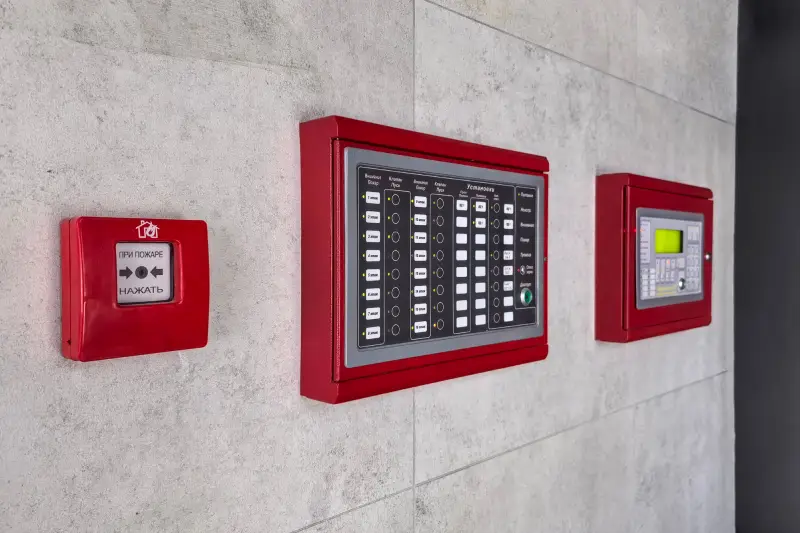
An initiating device under NFPA 72 refers to equipment that detects a fire-related condition or allows someone to manually activate the fire alarm system.
Examples may include:
- Smoke detectors
- Heat detectors
- Manual pull stations
- Other initiating devices depending on the system design
The specific devices installed depend on the building’s occupancy, applicable codes, and fire protection strategy.
Notification Appliances
A notification appliance under NFPA is designed to notify building occupants that an alarm condition exists.
Depending on the facility, notification appliances may include:
- Audible alarms
- Visual notification devices
- Combination notification equipment
The selection and placement of notification appliances varies according to building layout and applicable code requirements.
When Should a Commercial Fire Alarm System Be Evaluated?
Commercial fire alarm systems should be evaluated periodically throughout the life of the building, not only after installation. Businesses commonly review their systems when equipment ages, renovations are planned, occupancy changes occur, or operational requirements evolve.
Evaluation considerations often include:
- Fire alarm testing requirements NFPA
- System age and service history
- Availability of replacement parts
- Compatibility with newer technologies
- Planned building renovations or expansions
- Changes to notification coverage or initiating devices
- Inspection and testing requirements following system modifications
Regular system evaluations can help businesses determine whether continued maintenance, system upgrades, or equipment replacement is the most appropriate long-term approach. The specific requirements depend on the installed fire alarm system and the codes adopted by the local jurisdiction.
Frequently Asked Questions About NFPA 72
Who is responsible for following NFPA 72 requirements in a commercial building?
Responsibility for complying with NFPA 72 requirements depends on the building, occupancy type, and the codes adopted by the local jurisdiction. Commercial property owners and managers are typically responsible for maintaining fire alarm systems, scheduling required inspections and testing, and keeping appropriate system records. Specific responsibilities should always be evaluated based on applicable local requirements.
Who determines the inspection and testing schedule for a commercial fire alarm system?
Inspection and testing schedules are established according to applicable fire alarm testing requirements under NFPA, the installed fire alarm system, and the codes adopted by the local jurisdiction. Required intervals vary depending on the equipment, occupancy type, and applicable regulations.
Who conducts an AHJ fire alarm inspection?
An AHJ fire alarm inspection is performed by the Authority Having Jurisdiction (AHJ), which is responsible for interpreting and enforcing applicable fire alarm and building code requirements. Depending on the jurisdiction, inspections may include reviewing system documentation, testing records, maintenance history, and overall code compliance.
What does fire alarm code compliance involve for commercial buildings?
Fire alarm code compliance involves more than installing a fire alarm system. It includes maintaining the system, completing required inspections and testing, documenting maintenance activities, and ensuring the system continues operating in accordance with the codes adopted by the local jurisdiction. Compliance requirements vary depending on the building, occupancy type, and applicable regulations.
How can businesses prepare for an AHJ fire alarm inspection?
Before an AHJ fire alarm inspection, businesses should organize inspection reports, testing records, maintenance documentation, records of completed repairs, and documentation of any system modifications. Keeping this information organized can help support the inspection process and ongoing fire alarm management.
What fire alarm documentation should businesses keep?
Businesses typically maintain system drawings, device inventories, inspection reports, testing documentation, maintenance history, equipment replacement records, and service reports. Organized documentation can simplify future maintenance, support fire alarm code compliance, and assist during inspections or future system evaluations.
Do all commercial buildings have the same NFPA 72 requirements?
No. NFPA 72 requirements 2024 vary depending on factors such as occupancy classification, building use, installed fire protection systems, and the codes adopted by the local jurisdiction. Requirements should always be evaluated based on the specific property and its applicable regulations.
Do notification appliance requirements vary between commercial buildings?
Yes. Notification appliance NFPA requirements vary based on factors such as occupancy type, building layout, occupant needs, and the applicable code requirements. The type, placement, and performance of notification appliances should be evaluated for each individual commercial facility.
Honor Security provides commercial security solutions for businesses throughout Saginaw, Bay City, Midland, and the surrounding Great Lakes Bay Region. If you’re evaluating commercial fire alarm technologies or planning future system improvements, our team can discuss solutions that align with your building, operational requirements, and long-term safety objectives.
