 Skip to content
Choosing the Right Night Vision Security Camera for Your Business
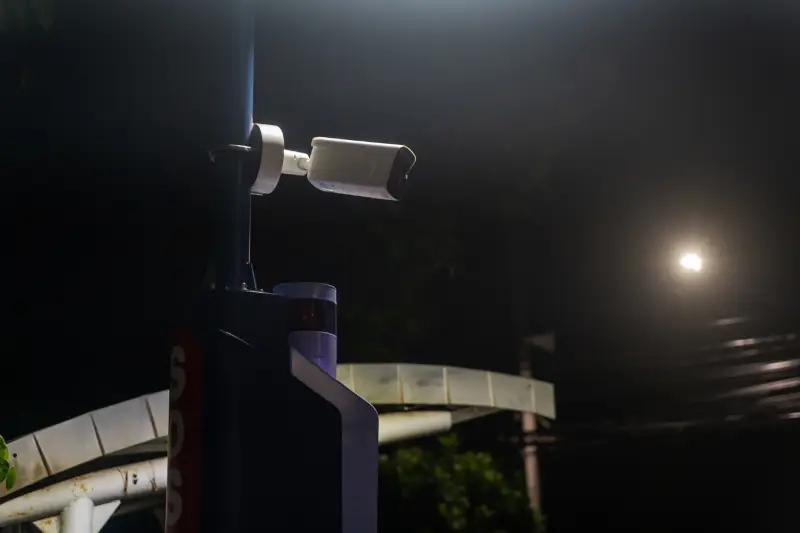
A night vision security camera helps businesses maintain visibility when lighting conditions change, allowing commercial surveillance to continue beyond normal operating hours. Whether monitoring parking lots, building entrances, warehouses, or other outdoor areas, selecting the right low-light camera technology requires more than comparing resolution alone. Understanding how different night vision technologies perform can help businesses evaluate solutions that align with their property’s operational requirements and security objectives.
Which Commercial Properties Benefit From Night Vision Surveillance?
Many businesses require surveillance after dark when facilities are unoccupied or have reduced staffing. Organizations often evaluate commercial night vision camera solutions to improve visibility in areas where conventional cameras may have limited performance under low-light conditions.
Commercial environments that frequently evaluate night vision surveillance include:
- Office buildings
- Warehouses
- Manufacturing facilities
- Retail businesses
- Healthcare facilities
- Educational campuses
- Multi-tenant commercial properties
The most appropriate deployment depends on the property’s layout, nighttime activity, lighting conditions, and surveillance objectives.
How Do Night Vision Security Cameras Work?
A low-light security camera is designed to capture usable images in environments with limited illumination by using specialized imaging technologies.
Depending on the selected platform, a night vision system may incorporate:
- Infrared security camera technology for businesses
- Infrared LED range for nighttime illumination
- Starlight sensor camera technology for enhanced low-light imaging
- IR cut filter functionality
- Lux rating cameras to indicate minimum lighting performance
The combination of technologies varies depending on the camera model, installation environment, and the operational requirements of the facility.
What Should Businesses Consider Before Installing Night Vision Cameras?
Selecting commercial night vision cameras involves more than identifying areas that require after-hours surveillance. Businesses should evaluate how the cameras will perform in the actual lighting conditions found throughout the property.
Common planning considerations include:
- Existing exterior lighting
- Camera mounting locations
- Viewing distances
- Environmental conditions
- Recording requirements
- Network infrastructure
- Future surveillance expansion
Some businesses also compare color night vision capabilities with traditional infrared imaging when evaluating surveillance for different commercial environments. The appropriate solution depends on lighting conditions, monitoring objectives, and the selected surveillance platform.
How Night Vision Cameras Support Commercial Surveillance
Night vision cameras are often used as part of a broader commercial surveillance strategy rather than as standalone devices. Their primary role is to extend video coverage into periods of reduced visibility while complementing other compatible security technologies.
Depending on the selected system, night vision surveillance may support:
- Low-light surveillance perimeter monitoring
- Commercial video surveillance
- Remote video monitoring
- Centralized video management
- Integration with compatible commercial security technologies
Available capabilities depend on the selected camera platform, recording equipment, lighting conditions, and existing surveillance infrastructure.
Talk to an Honor Security Expert
Comparing Night Vision Technologies for Commercial Surveillance
Commercial surveillance systems use different approaches to improve image quality in low-light environments. Businesses evaluating night vision cameras often compare available technologies based on the areas being monitored and the lighting conditions at the property.
Common comparisons include:
- Infrared security camera technology vs. color night vision
- Starlight sensor camera performance in low-light environments
- Different infrared LED range capabilities
- Camera sensitivity based on lux rating
- Fixed versus variable nighttime illumination
Each technology is designed for different surveillance conditions, and the most appropriate solution depends on the property’s layout, available lighting, and operational requirements.
Frequently Asked Questions About Night Vision Security Cameras
How much does a night vision security camera system cost for a commercial property?
The cost of a night vision security camera system depends on factors such as the number of cameras, low-light imaging technology, recording equipment, installation complexity, storage requirements, and planned integrations. As a general guideline, commercial surveillance projects may range from approximately $3,000 to $20,000 or more, while larger or more complex facilities may require a greater investment. A professional site assessment provides the most accurate project estimate.
Can existing commercial surveillance systems be upgraded with night vision cameras?
In many cases, yes. Whether a commercial night vision camera can be incorporated into an existing surveillance system depends on the compatibility of the recording platform, network infrastructure, camera placement, and the organization’s operational requirements. A professional evaluation can help determine the most practical upgrade approach.
What does the lux rating of a security camera indicate?
The lux rating of a camera indicates the minimum amount of light required for the camera to produce an image under specified conditions. When comparing lux rating cameras, businesses should consider that published ratings vary by manufacturer, camera design, and testing methodology.
How does an IR cut filter improve commercial surveillance?
An IR cut filter helps compatible cameras deliver more accurate color images during daylight while automatically adjusting for infrared operation in lower-light conditions. Available functionality depends on the selected camera technology and system configuration.
Can infrared security cameras record in complete darkness?
Many infrared security camera systems are designed to capture images in environments with little or no visible light by using built-in infrared illumination. Available performance depends on the camera’s infrared LED range, installation environment, and the selected surveillance platform.
Can different night vision camera technologies be used within the same surveillance system?
Yes. Depending on the selected platform, businesses may combine starlight sensor camera, color night vision, and infrared camera technologies to address different lighting conditions across a commercial property. Compatibility depends on the surveillance platform, recording equipment, and overall system design.
What factors affect image quality in low-light surveillance?
Image quality for low-light security camera systems can be influenced by ambient lighting, camera placement, lens characteristics, imaging technology, infrared illumination, environmental conditions, and recording settings. Evaluating these factors helps businesses understand how different cameras may perform in nighttime commercial environments.
Can night vision cameras support remote monitoring after business hours?
Many commercial surveillance platforms support remote access to compatible night vision security camera systems, allowing authorized users to review live or recorded video after business hours. Available remote monitoring capabilities depend on the selected recording platform, network infrastructure, and system configuration.
Honor Security provides commercial security solutions for businesses throughout Saginaw, Bay City, Midland, and the surrounding Great Lakes Bay Region. If you’re evaluating commercial surveillance technologies for reliable monitoring in low-light environments, our team can help you discuss solutions that align with your facility, operational requirements, and long-term security objectives.
