
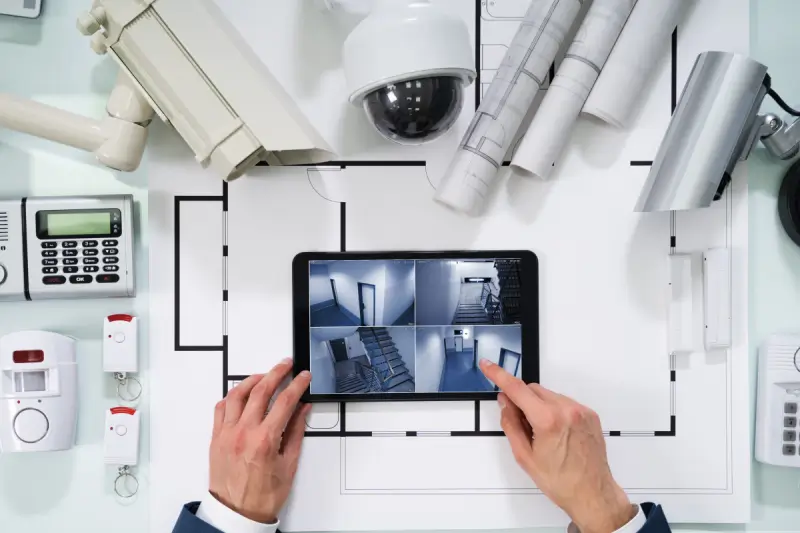
What Determines How Many Security Cameras Your Business Needs
One of the most common questions businesses ask when planning a new surveillance system is, “How many security cameras do I need?” The answer depends less on the size of the building and more on how the property functions every day. Customer traffic, employee movement, building layout, restricted areas, and operational priorities all influence the number of security cameras for business environments.
Rather than focusing on a specific camera count, businesses benefit from understanding how professional business camera coverage planning identifies the areas that require visibility while minimizing blind spots and unnecessary equipment.
Start With Your Business Operations — Not the Camera Count
There isn’t a universal formula for determining how many CCTV cameras are needed for every commercial property. Two businesses occupying similar-sized buildings may require completely different surveillance strategies based on how they operate.
For example, a warehouse may prioritize loading docks and inventory movement, while a retail store focuses on customer entrances, checkout areas, and merchandise displays. An office may require greater visibility around reception, employee entrances, and restricted workspaces.
Understanding how people, vehicles, deliveries, and visitors move throughout the property provides a much stronger foundation than simply counting rooms or square footage.
The Areas That Usually Drive Camera Requirements
Most commercial surveillance plans begin by identifying the locations where visibility provides the greatest operational value.
Entry and Exit Points
Entrances are often among the highest-priority locations because they document employees, visitors, vendors, and customers entering or leaving the property. Proper coverage of entry and exit points helps create a clear record of building activity throughout the day.
Customer and Public Areas
Businesses serving customers often monitor reception areas, waiting rooms, sales floors, or service counters to improve visibility during daily operations and assist when reviewing reported incidents.
Employee Workspaces
Depending on operational requirements, businesses may choose to monitor production areas, warehouses, workstations, or other employee spaces where operational awareness supports day-to-day management.
Restricted Areas
Server rooms, inventory storage, cash handling locations, offices, and equipment rooms often require additional surveillance because they contain sensitive business assets or restricted information.
Exterior Coverage
Parking lots, loading docks, service entrances, and building perimeters frequently require outdoor surveillance to improve visibility beyond the building itself.
Each of these areas contributes differently to the overall security camera coverage calculation, which is why camera quantity varies from one business to another.
Why Camera Placement Matters More Than Camera Quantity
Adding more cameras doesn’t automatically improve security. Poorly positioned cameras can still leave important activity undocumented, while strategically placed cameras may provide broader and more useful coverage.
Professional business camera coverage planning evaluates factors such as:
- Building layout
- Traffic flow
- Ceiling height
- Viewing angles
- Lighting conditions
- Potential obstructions
- Existing security infrastructure
The objective is to position cameras where they provide meaningful visibility rather than simply increasing the total number installed.
Planning Around Camera Field of View
Every surveillance camera captures a specific camera field of view, which determines how much of an area can be monitored from a single location. Wider viewing angles may cover larger spaces, while narrower fields of view often provide greater detail for entrances, registers, or access points.
Selecting the appropriate field of view for each location helps businesses balance broad visibility with image clarity based on the purpose of the camera.
Eliminating Blind Spots Before Installation
One of the most important goals during site survey security planning is identifying areas where surveillance may be limited.
Blind spots can occur because of:
- Interior walls
- Shelving or storage racks
- Machinery or equipment
- Building corners
- Landscaping
- Vehicle parking
- Lighting conditions
Addressing blind spot coverage before installation helps businesses avoid discovering surveillance gaps after the system is already operational.
Indoor and Outdoor Cameras Serve Different Purposes
An effective surveillance strategy rarely relies on one type of camera for every environment. Indoor vs outdoor cameras are selected based on where they will operate and the conditions they are expected to handle.
Indoor cameras often prioritize interior visibility and operational monitoring, while outdoor cameras are designed for changing weather conditions and exterior environments. Evaluating each location individually helps ensure the selected equipment matches the surrounding conditions and security objectives.
Resolution Planning Is Part of the Bigger Picture
Higher resolution doesn’t automatically mean better surveillance. Camera resolution planning should reflect what each camera is expected to capture.
For example, a camera monitoring a wide parking area may have different image requirements than one positioned at a building entrance or reception desk. Matching resolution to the intended purpose helps businesses create a surveillance system that delivers useful information without unnecessarily increasing system complexity.
Why a Professional Site Survey Makes the Difference
Before recommending the number of security cameras for a business, commercial security professionals typically perform a site survey security assessment. Rather than estimating camera quantities from a floor plan alone, the survey evaluates how the property functions in real-world conditions.
A site survey may consider:
- Building layout and operational flow
- Entry and exit points
- Interior and exterior security priorities
- Existing infrastructure
- Areas with limited visibility
- Opportunities to improve camera placement
This planning process helps businesses develop a surveillance strategy based on operational needs rather than assumptions.
Honor Security helps businesses throughout Saginaw, Bay City, Midland, and the surrounding Great Lakes Bay Region design commercial surveillance systems that align with how each property operates. Whether you’re replacing an existing system or planning security for a new facility, our team can perform a professional site assessment and recommend a camera strategy tailored to your business.
Talk to an Honor Security Expert
Frequently Asked Questions About Business Security Camera Planning
Can two businesses of the same size require a different number of security cameras?
Yes. The number of security cameras for business depends on how the property operates rather than its square footage alone. Building layout, entry points, operational workflows, restricted areas, and surveillance objectives all influence camera requirements.
Is it better to install more cameras or improve camera placement?
Strategic placement often provides greater value than simply increasing the number of cameras. Effective business camera coverage planning focuses on reducing blind spots and monitoring critical operational areas before adding additional devices.
How does camera resolution affect coverage planning?
Camera resolution planning helps determine whether a camera is intended to capture broad activity across a larger area or provide greater detail at locations such as entrances, reception areas, or access points. Resolution should be matched to each camera’s purpose.
When should a business review its surveillance coverage?
Businesses should evaluate camera coverage when expanding facilities, remodeling, changing workflows, adding restricted areas, or experiencing operational changes that may create new security priorities.
Can existing security cameras be incorporated into a new surveillance plan?
In many cases, existing cameras can remain part of a new system if they continue to meet operational requirements and are compatible with the overall surveillance strategy. A professional assessment can determine whether upgrades or additional coverage are appropriate.
Why is a professional site survey important before installing security cameras?
A site survey security assessment evaluates building layout, traffic patterns, visibility, and potential blind spots before equipment recommendations are made. This planning process helps ensure surveillance coverage aligns with the property’s operational needs.
How can businesses plan for future growth when installing security cameras?
Many businesses design surveillance systems with future expansion in mind. Planning for additional cameras during the initial design process can make it easier to expand coverage as operations, facilities, or security requirements evolve.
Who provides commercial security camera planning in the Great Lakes Bay Region?
Businesses throughout Saginaw, Bay City, Midland, and the surrounding Great Lakes Bay Region can work with Honor Security to evaluate surveillance needs, perform professional site assessments, and design commercial camera systems that support their operational requirements.