 Skip to content
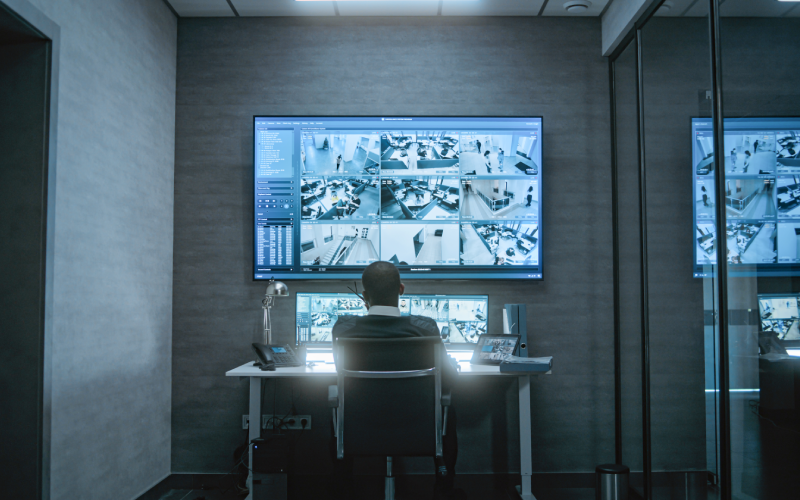
An integrated security system unifies access control, video surveillance, intrusion detection, and intercoms into one coordinated platform instead of separate, disconnected products. For a business, integration means faster incident response, easier management, fewer blind spots, and one accountable provider. It is the difference between security devices and a security system.
Most businesses do not start with an integrated security system. They add a camera system one year, an alarm the next, and a card reader after that, each from a different vendor on a different platform. An integrated security system replaces that patchwork with one unified platform where every component works together. For a Michigan business comparing options, integration is what turns a pile of devices into a system that actually responds.
What Does “Integrated” Actually Mean?
An integrated security system connects your cameras, access control, intrusion detection, and intercoms so they share information and act together through a single platform. When a door is forced, the system can flag the door, pull the nearest camera, log the event, and alert monitoring, all automatically. Standalone products cannot do that, because they do not talk to each other.
The unifying thread is interoperability, the ability of equipment from different makers to communicate. Open standards like ONVIF exist specifically to enable this across IP-based physical security products, so cameras, recorders, and access devices from different vendors can work in one solution (Source: ONVIF). A fully integrated security solution uses that interoperability to make the whole greater than the parts.
Standalone Devices vs an Integrated Security System
| Capability | Standalone Devices | Integrated Security System |
|---|---|---|
| Incident response | Manual, check each system | Automatic, linked across components |
| Management | Multiple apps and logins | One platform, one interface |
| Accountability | Several vendors | One responsible integrator |
| Blind spots | Gaps between systems | Coordinated coverage |
| Troubleshooting | Vendor finger-pointing | One team owns the fix |
| Scaling | Re-integrate each time | Add to the existing platform |
Why Businesses Need Integration
Physical security is most effective when controls work in layers rather than in isolation, a principle reflected in federal physical security guidance built around deter, detect, and delay (Source: Cybersecurity and Infrastructure Security Agency). An integrated security system is what makes those layers act as one. The practical benefits:
- Faster response. A single event triggers coordinated action across cameras, doors, and alarms.
- One platform to manage. Staff learn one interface instead of juggling several apps.
- Fewer blind spots. Components share data, so events do not fall between systems.
- One accountable provider. When something breaks, one team owns the fix, with no vendor finger-pointing.
- Cleaner scaling. New cameras or doors add to the existing platform instead of starting over.
The Single-Source Integrator Advantage
An integrated security system is only as unified as the company behind it. A single-source integrator designs, installs, services, and supports every layer under one contract, which is why integration delivers on its promise. Honor Security operates as a single-source integrator across access control, cameras, intrusion, intercoms, environmental monitoring, and repairs: one contract, one accountable team, one platform strategy. That is a different model than buying standalone products from multiple vendors and hoping they cooperate.
What an Integrated System Includes
A complete business platform typically unifies:
- Access control: who can enter, when, and which doors, with credential management.
- Video surveillance: cameras and recording, linked to events for verification.
- Intrusion detection: sensors and monitored alarms tied to the same platform.
- Intercoms and visitor entry, so doors and communication work together.
- Advanced technologies: environmental and air-quality monitoring where needed.
The Michigan Angle
Michigan’s manufacturing economy, multi-building campuses, and cold-weather operating conditions reward integration. A unified platform lets a Great Lakes Bay Area business manage multiple facilities from one interface, coordinate access and video across sites, and rely on weather-rated equipment chosen for local conditions rather than a one-size-fits-all kit. Honor Security installs commercial platforms from established manufacturers and recommends based on the facility, not a single vendor relationship.
Myth: Integration Means Replacing Everything at Once
Do you have to rip out existing equipment to integrate? Not usually. Because of interoperability standards, much existing IP equipment can be brought onto a unified platform in phases. A good integrator assesses what you have, keeps what works, and integrates the rest on a planned schedule rather than forcing a full replacement on day one.
More Questions Business Owners Ask
What is the difference between an integrated and a standalone system?
Standalone devices operate separately. An integrated security system connects them on one platform so they share information and respond together.
Does integration require all equipment from one brand?
No. Open standards like ONVIF let conformant IP equipment from different makers work together in one solution (Source: ONVIF).
Is an integrated system more secure?
It is more responsive and harder to defeat, because layered controls coordinate instead of leaving gaps between separate systems (Source: Cybersecurity and Infrastructure Security Agency).
Can I integrate systems I already own?
Often yes, in phases. An integrator assesses existing equipment and unifies what is compatible.
Who manages an integrated system?
Ideally one single-source integrator that designed and installed it, so one team is accountable for the whole platform.
Key Facts at a Glance
- An integrated security system unifies access, video, intrusion, and intercoms on one platform.
- Open standards like ONVIF enable interoperability across IP-based physical security products from different makers (Source: ONVIF).
- Layered, coordinated controls are central to recognized physical security guidance (Source: Cybersecurity and Infrastructure Security Agency).
- A single-source integrator delivers one contract, one team, one platform.
- Integration usually happens in phases, not a full rip-and-replace.
- Unified platforms make multi-site Michigan operations easier to manage.
Unify Your Michigan Business Security with One Integrator
An integrated security system turns disconnected devices into a system that responds. Honor Security designs and supports unified access, video, intrusion, and intercom platforms for Michigan businesses as a single accountable integrator.
Honor Security is a licensed Michigan commercial security integrator headquartered at 141 Harrow Lane in Saginaw, with documented client relationships exceeding ten years. Call 989-401-7070 or contact us online to plan an integrated system for your business.
Keep reading:
