 Skip to content
Choosing the Right Warehouse Security Camera System
A well-designed warehouse security camera system doesn’t just record activity; it helps businesses monitor operations, protect inventory, improve visibility across large facilities, and support incident investigations. Because warehouses have unique layouts, selecting the right surveillance solution requires careful planning to ensure cameras provide meaningful coverage where it’s needed most.
Whether you’re securing a warehouse, distribution center, or manufacturing facility, understanding camera placement and coverage considerations can help you make a more informed investment.
Step 1: Identify Your Highest-Priority Coverage Areas
Not every part of a warehouse presents the same level of security risk. Before selecting equipment, determine which areas require the greatest visibility.
Common locations include:
- Shipping and receiving docks
- Loading bays
- Inventory storage aisles
- Employee entrances
- Vehicle access points
- High-value inventory areas
- Exterior perimeter
Prioritizing these locations helps create a surveillance strategy that supports both security and day-to-day operations.
Step 2: Select Cameras That Match the Environment
Different warehouse environments often require different camera types.
When evaluating industrial security cameras for warehouse applications, consider:
- Ceiling height
- Lighting conditions
- Aisle length
- Indoor or outdoor installation
- Dust or environmental conditions
Matching the camera to the environment helps improve image quality and overall system performance.
Step 3: Plan Camera Coverage Carefully
Effective surveillance depends on more than the number of cameras installed.
Businesses should evaluate whether coverage will effectively monitor:
- Long warehouse aisles
- Open storage areas
- Loading docks
- Building entrances
- Traffic flow
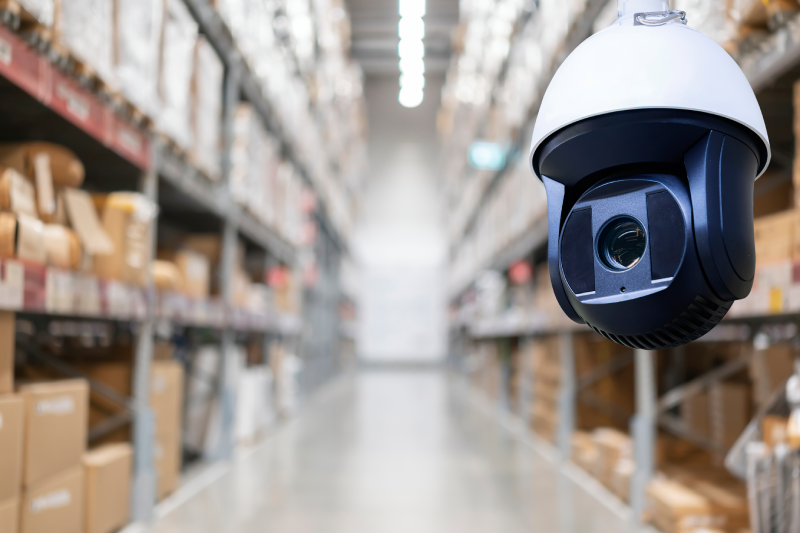
Depending on the application, businesses may consider a wide-angle warehouse camera for broader viewing areas or PTZ camera warehouse coverage where operators may need to monitor larger spaces or adjust viewing angles remotely.
Step 4: Consider Operational Hot Spots
Some warehouse activities deserve additional surveillance because they involve frequent movement of people, vehicles, or inventory.
Examples include:
- Forklift area surveillance
- Shipping stations
- Receiving areas
- Packaging operations
- Inventory transfer points
Focusing additional coverage on these operational areas can improve visibility during routine operations and incident reviews.
Step 5: Evaluate Advanced Surveillance Capabilities
Some commercial facilities evaluate additional technologies based on their operational requirements.
Depending on the environment, businesses may consider:
- Remote video access
- Video management platforms
- Motion-based recording
- Thermal camera industrial facility applications
For facilities operating in challenging lighting or environmental conditions, thermal camera industrial facility solutions may be evaluated alongside traditional surveillance cameras where appropriate.
Step 6: Compare Complete Surveillance Solutions
Choosing a surveillance system involves more than selecting cameras.
Before making a decision, compare:
- Camera placement strategy
- Recording capabilities
- Video management
- Future expansion
- Integration with other commercial security technologies
- Ongoing service and support
Looking at the complete solution helps businesses select a surveillance system that continues supporting warehouse operations as security requirements change.
Planning a Warehouse Surveillance System That Works
Before investing in a warehouse security camera system, confirm that the solution can:
- Provide effective coverage across critical operational areas.
- Support your inventory protection objectives.
- Monitor shipping, receiving, and warehouse traffic efficiently.
- Expand as your facility grows.
- Integrate with other commercial security technologies where appropriate.
- Simplify day-to-day video management.
Evaluating these considerations before installation can help businesses choose a surveillance solution that delivers long-term operational value.
Frequently Asked Questions About Warehouse Security Camera Systems
How many cameras does a warehouse security camera system typically require?
The number of cameras depends on the warehouse size, building layout, ceiling height, operational areas, and security objectives. Smaller facilities may only require coverage at entrances, loading docks, and storage areas, while larger warehouses often need broader surveillance throughout the property. A professional site assessment helps determine the appropriate number of cameras and their placement.
Can a warehouse security camera system be installed in phases?
Yes. Many businesses begin by securing high-priority areas such as loading docks, shipping and receiving zones, and inventory storage before expanding surveillance to additional sections of the facility. A phased approach allows organizations to improve security while planning for future operational growth.
How much does a warehouse security camera system cost?
The cost of a warehouse security camera system depends on factors such as the number of cameras, recording equipment, storage capacity, installation complexity, and facility size. As a general guideline, many commercial warehouse surveillance projects range from approximately $5,000 to $25,000 or more, while larger warehouses, distribution centers, or industrial facilities with extensive coverage requirements may require a greater investment. A professional site assessment provides the most accurate project estimate.
Can an existing distribution center CCTV system be upgraded instead of replaced?
In many cases, yes. Whether an existing distribution center CCTV system can be upgraded depends on the condition of the current equipment, compatibility with newer surveillance technologies, and your operational requirements. A system evaluation can help determine whether upgrading or replacing the existing installation provides the better long-term value.
How can forklift area surveillance improve warehouse safety?
Forklift area surveillance provides additional visibility in areas where vehicles, employees, and inventory frequently interact. Reviewing recorded activity can support incident investigations, operational reviews, and safety initiatives. Camera placement should always reflect the warehouse layout and traffic patterns.
When should businesses consider a thermal camera industrial facility solution?
A thermal camera industrial facility solution may be evaluated when environmental conditions or operational requirements make conventional video surveillance less effective. Whether thermal imaging is appropriate depends on the facility, the areas being monitored, and the organization’s overall security objectives.
What should businesses consider before planning a manufacturing security camera system?
Before planning a manufacturing security camera system, businesses should evaluate production areas, environmental conditions, recording requirements, future expansion plans, and whether the surveillance system will integrate with other commercial security technologies. Planning these factors early helps ensure the system supports both operational efficiency and facility security.
How do I compare industrial security cameras warehouse solutions?
Rather than comparing camera specifications alone, evaluate how different industrial security cameras warehouse solutions support your facility’s layout, coverage requirements, recording capabilities, future expansion, video management, and ongoing service. Choosing a solution designed around your warehouse operations often provides greater long-term value than selecting equipment based solely on technical features.
Honor Security designs and installs commercial video surveillance systems for businesses throughout Saginaw, Bay City, Midland, and the surrounding Great Lakes Bay Region. Whether you’re securing a warehouse, distribution center, or industrial facility, our team can help design a surveillance solution tailored to your building, operations, and security objectives.
