 Skip to content
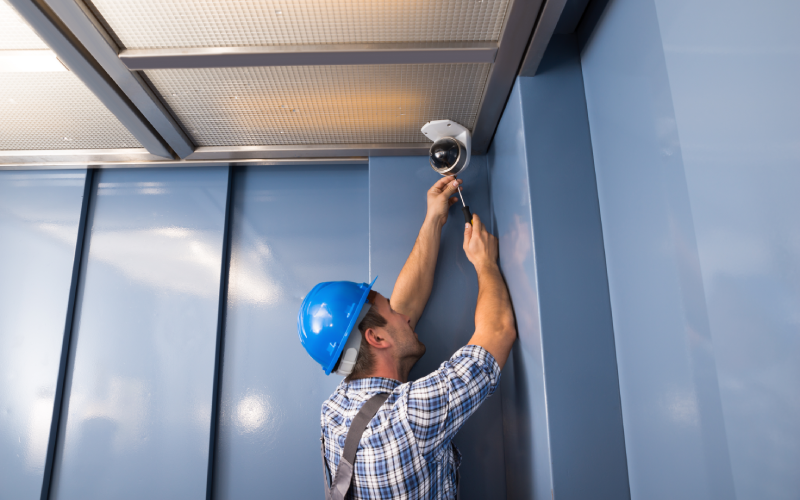
A security system integrator designs, installs, and supports multiple security technologies, access control, cameras, intrusion, intercoms, as one unified platform. An alarm company typically focuses on burglar and fire alarms and their monitoring. A business that needs more than alarms, or wants one accountable partner across systems, needs an integrator.
“Alarm company” and “security system integrator” get used as if they mean the same thing, but they describe different scopes of work. The distinction matters when a Michigan business is deciding who should design and own its security. This guide explains what a security system integrator does, how that differs from an alarm company, and which one fits your needs.
What Is a Security System Integrator?
A security system integrator is a company that designs, installs, integrates, and services multiple security technologies as one coordinated system, rather than selling a single product line. An integrator unifies access control, video surveillance, intrusion detection, intercoms, and environmental monitoring on one platform, and owns the design and accountability across all of them.
Integrators are also the partner businesses turn to for compliance and complex builds: multi-door access, multi-site video, and platform decisions that have to work together for years.
What Is an Alarm Company?
An alarm company specializes in burglar and fire alarm systems and their monitoring. That is a valuable, focused service. The limitation is scope: when a business also needs cameras, access control, intercoms, and integration across those systems, an alarm-only provider often subcontracts the rest or leaves it to other vendors, which fragments accountability.
Security System Integrator vs Alarm Company: Side by Side
| Factor | Alarm Company | Security System Integrator |
|---|---|---|
| Core focus | Burglar and fire alarms, monitoring | Multiple technologies as one system |
| Scope | Alarms | Access, video, intrusion, intercom, environmental |
| Integration | Limited | Central to the model |
| Accountability | The alarm portion | The whole platform, one contract |
| Best for | Alarm-only needs | Multi-technology, multi-site, compliance-driven needs |
| Design approach | Product install | System design and install |
Credentials That Signal a Serious Provider
Whether you choose an integrator or an alarm company, credentials separate professionals from installers:
- NICET certification. The National Institute for Certification in Engineering Technologies offers nationally recognized certifications for technicians and designers, including fire alarm and security systems, maintained through continuing development and recertification (Source: NICET).
- UL listing. A UL-listed alarm company has demonstrated that its systems are installed, serviced, and monitored in compliance with applicable codes and standards (Source: UL Solutions).
- State licensing. Professional licensing requirements vary by state and locality, so confirm the provider holds what your jurisdiction requires.
Compliance Is an Integrator Job
For businesses tied to federal funding or contracts, security equipment is also a compliance question. Federal acquisition rules under Section 889 prohibit covered agencies and many contractors and grant recipients from using certain named video surveillance and telecommunications equipment (Source: Federal Acquisition Regulation 52.204-25). Sorting compliant equipment, auditing what is installed, and planning replacements is exactly the kind of cross-system work an integrator handles and an alarm-only vendor usually does not.
Which One Does Your Business Need?
- Choose an alarm company if your only need is a burglar or fire alarm with monitoring, and you do not plan to add cameras, access control, or integration.
- Choose a security system integrator if you need more than alarms, want cameras, access, intrusion, and intercoms to work together, have multiple sites, or face compliance requirements.
- Either way, ask about certifications, licensing, and who is accountable when something breaks across systems.
The Single-Source Advantage
The biggest practical difference is accountability. With multiple vendors, a failure during an incident becomes a finger-pointing exercise. A single-source integrator designs, installs, monitors, and services every layer, so one team owns the outcome. Honor Security operates this way across access control, cameras, intrusion, intercoms, environmental monitoring, and repairs: one contract, one accountable team, one platform strategy.
Myth: An Integrator Always Costs More
Is an integrator always more expensive than an alarm company? Not over the life of the system. Buying alarms from one vendor, cameras from another, and access control from a third often costs more to maintain, troubleshoot, and integrate later than a single coordinated platform. Total cost of ownership, not the first invoice, is the fair comparison.
More Questions Business Owners Ask
Is a security system integrator the same as an alarm company?
No. An alarm company focuses on alarms and monitoring. An integrator designs and unifies multiple security technologies as one system.
Do I need an integrator if I only want cameras?
If cameras are truly all you will ever need, a focused provider can work. If you expect to add access control, alarms, or integration, an integrator avoids re-doing the work later.
What certifications should an integrator have?
Look for NICET-certified technicians and designers and UL-listed practices, plus any state and local licensing your jurisdiction requires (Source: NICET).
Can an integrator also handle monitoring?
Yes. A full-service integrator designs, installs, and arranges monitoring, so one team is accountable end to end.
Who handles equipment compliance like Section 889?
An integrator, as part of cross-system design, audit, and replacement planning (Source: Federal Acquisition Regulation 52.204-25).
Key Facts at a Glance
- An integrator designs and unifies multiple technologies; an alarm company focuses on alarms and monitoring.
- NICET offers nationally recognized certifications for security and fire alarm technicians and designers (Source: NICET).
- A UL-listed alarm company meets recognized installation, service, and monitoring standards (Source: UL Solutions).
- Federal Section 889 rules restrict certain surveillance equipment for many federally connected organizations (Source: Federal Acquisition Regulation 52.204-25).
- A single-source integrator means one accountable team across systems.
- Total cost of ownership favors a coordinated platform for multi-technology needs.
Get One Accountable Security Partner in Michigan
If your business needs more than an alarm, a security system integrator gives you one platform and one accountable team. Honor Security is a single-source integrator serving Michigan businesses across access, video, intrusion, intercoms, and repairs.
Honor Security is a licensed Michigan commercial security integrator headquartered at 141 Harrow Lane in Saginaw, with documented client relationships exceeding ten years. Call 989-401-7070 or contact us online to talk through your business security.
Keep reading:
