 Skip to content
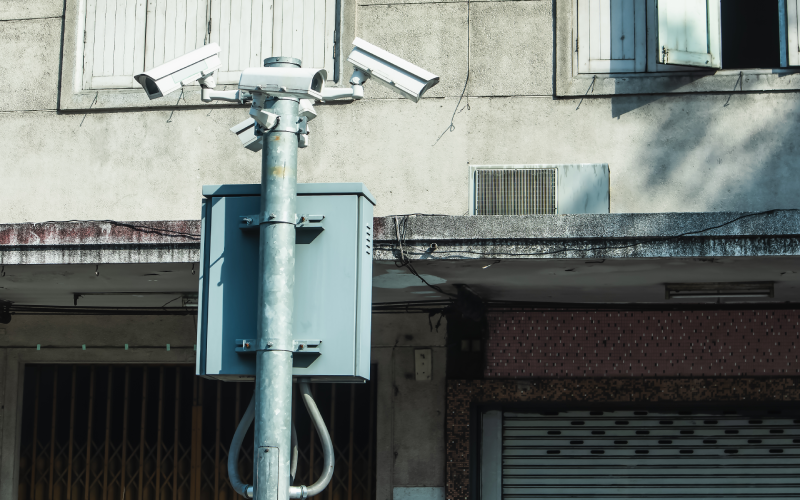
An IP camera sends digital video over a network for higher resolution, better integration, and easier scaling. An analog camera sends a video signal over coaxial cable to a recorder and is cheaper per camera but lower resolution and harder to integrate. For most new commercial systems, IP cameras are the modern standard; analog mainly fits reusing existing coax.
If you are specifying cameras for a business, the IP camera vs analog camera decision shapes resolution, integration, scalability, and cost for years. The short version: IP is where the industry has moved, and it is what makes cameras part of an integrated system rather than a standalone recording. This guide breaks down the differences for a commercial buyer in plain terms.
How Each Camera Type Works
An IP (network) camera digitizes video on the camera and transmits it over a network to a network video recorder (NVR) or the cloud. An analog camera sends a raw signal over coaxial cable to a digital video recorder (DVR) that does the processing. That single difference, where the video is digitized, drives the differences in resolution, cabling, integration, and scale.
Modern IP cameras commonly use Power over Ethernet (PoE), so one network cable carries both power and data, which simplifies commercial installs.
IP Camera vs Analog Camera: Side by Side
| Factor | Analog Camera | IP (Network) Camera |
|---|---|---|
| Resolution | Lower, limited detail | High, megapixel and up |
| Recorder | DVR | NVR or cloud |
| Cabling | Coaxial, often separate power | Single PoE network cable |
| Integration | Limited | Integrates with access, analytics, VMS |
| Analytics | Minimal | AI, person and vehicle detection, ONVIF features |
| Scalability | Harder to expand | Add cameras to the network |
| Cost per camera | Lower upfront | Higher upfront, more capability |
| Best for | Reusing existing coax, simple needs | New systems, integration, detail, scale |
Why IP Is the Commercial Standard
IP cameras are the modern commercial standard because they deliver higher resolution, integrate with the rest of a security platform, and scale on the network. Interoperability is a big reason. Open standards from ONVIF let conformant IP cameras, recorders, and management platforms from different makers work together, which reduces vendor lock-in and helps drive the industry’s shift from analog to digital (Source: ONVIF). An ONVIF-conformant IP camera can join a unified platform alongside access control and analytics in a way analog simply cannot.
When Analog Still Makes Sense
Is analog obsolete? Not entirely. Analog still fits when a business has extensive existing coaxial cabling it wants to reuse, has simple, fixed coverage needs, and is cost-sensitive per camera. Modern HD-over-coax options have extended analog’s life. For most new commercial deployments, though, IP wins on resolution, integration, and the ability to grow.
The Compliance Factor Commercial Buyers Miss
For businesses tied to federal contracts, grants, or funding, the camera brand is also a legal question. Section 889 of federal acquisition rules prohibits covered agencies and many contractors and grant recipients from procuring or using certain named video surveillance equipment, and the named manufacturers are specific companies identified in the regulation (Source: Federal Acquisition Regulation 52.204-25). Because this primarily affects networked IP cameras and their components, choosing compliant equipment, and working with an integrator who tracks it, matters for any Michigan business with federal exposure. Honor Security installs commercial IP platforms from established, compliance-minded manufacturers and recommends based on the facility, not a single vendor relationship.
The Michigan Install Factor
Outdoor commercial cameras in Michigan must be rated for real winters: sustained sub-freezing temperatures, snow, and ice. IP cameras with proper environmental ratings, weatherproof housings, and PoE simplify outdoor commercial installs across the Great Lakes Bay Area. Honor Security handles commercial IP camera installation sized for Michigan conditions, from single-camera additions to multi-hundred-camera deployments.
Myth: More Megapixels Always Means Better
Does a higher-megapixel IP camera always perform better? No. Resolution is one factor. Lens choice, low-light performance, frame rate, placement, and proper storage matter just as much. A well-placed, correctly specified camera beats a higher-megapixel one mounted in the wrong spot. This is where commercial design experience pays off.
More Questions Business Owners Ask
Is an IP camera better than analog?
For most new commercial systems, yes: higher resolution, integration, analytics, and easier scaling. Analog mainly fits reusing existing coax.
Do IP cameras need the internet?
No. IP cameras run on a local network and record to an on-site NVR. Internet is only needed for remote viewing or cloud storage.
What is ONVIF and why does it matter?
ONVIF is an open standard for interoperability among IP-based physical security products, so conformant cameras and recorders from different makers can work together (Source: ONVIF).
Can I mix IP and analog cameras?
Yes, with hybrid recorders, which is common during a phased upgrade from analog to IP.
Are my cameras a compliance risk?
They can be if your organization has federal funding or contracts and uses equipment named under Section 889 (Source: Federal Acquisition Regulation 52.204-25). An integrator can audit and plan compliant replacements.
Key Facts at a Glance
- IP cameras transmit digital video over a network for higher resolution and easier integration; analog sends a signal over coax to a DVR.
- ONVIF open standards let conformant IP equipment from different makers work together, driving the shift from analog to IP (Source: ONVIF).
- IP cameras commonly use PoE, so one cable carries power and data.
- Analog still fits reusing existing coax and simple, cost-sensitive needs.
- Section 889 restricts certain named surveillance equipment for federally connected organizations (Source: Federal Acquisition Regulation 52.204-25).
- Placement, lens, and low-light performance matter as much as megapixels.
Specify the Right Cameras for Your Michigan Business
The IP camera vs analog camera choice comes down to resolution, integration, compliance, and how you plan to grow. Honor Security designs and installs commercial camera systems for Michigan businesses, with the right platform sized for your facility.
Honor Security is a licensed Michigan commercial security integrator headquartered at 141 Harrow Lane in Saginaw, with documented client relationships exceeding ten years. Call 989-401-7070 or contact us online for a commercial camera consultation.
Keep reading:
