
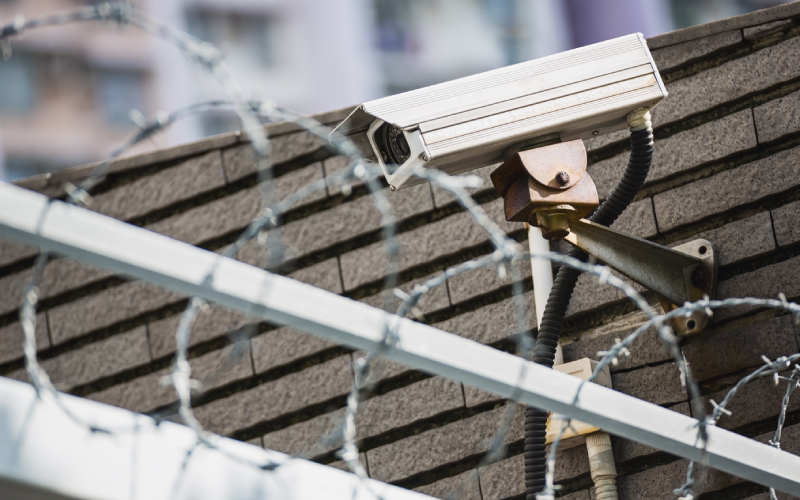
A perimeter security system protects the outer boundary of a commercial property before an intruder reaches the building. It layers outdoor cameras, fence or boundary sensors, lighting, and perimeter intrusion detection into one monitored system. For a Michigan business, strong outdoor perimeter security detects and delays a threat early, while there is still time for a verified response.
Most commercial security starts at the door. A perimeter security system starts at the property line, which is where you want to detect a problem first. This guide explains what perimeter security for commercial property includes, how the detection layers work, and what Michigan business owners should weigh before buying.
Why Perimeter Security Matters for a Business
The earlier you detect an intruder, the more options you have. Physical security is strongest when controls work in layers, a principle reflected in federal physical security guidance built around deter, detect, and delay (Source: Cybersecurity and Infrastructure Security Agency). A perimeter is the first of those layers: it deters casual intruders, detects serious ones at the boundary, and delays them long enough for a response.
The stakes are real. The FBI reports an average loss of $2,661 per burglary, and a large share of burglaries strike non-residential buildings such as warehouses, yards, and industrial sites (Source: Federal Bureau of Investigation). Properties with outdoor storage, parking, and loading areas are exactly the kind of sites where a boundary security solution pays off.
What Is a Perimeter Security System?
A perimeter security system is a coordinated set of outdoor detection and surveillance technologies that protect a property’s boundary and approaches, rather than just its interior. It typically combines a perimeter camera system, fence or boundary sensors, lighting, and a commercial perimeter alarm system, all tied to monitoring so a boundary event becomes a verified alarm.
The point is layering. A single fence or a single camera is a point of failure. A designed system overlaps detection methods so a gap in one is covered by another.
The Layers of Outdoor Perimeter Security
Use this breakdown to understand how a commercial perimeter comes together.
| Layer | What It Does | Typical Technology |
|---|---|---|
| Boundary detection | Detects contact or crossing at the fence or property line | Fence detection sensor, buried or beam sensors |
| Volumetric detection | Detects movement in open outdoor zones | Outdoor motion detector commercial, dual-technology sensors |
| Surveillance | Sees and records who and what crosses | Perimeter camera system with night vision and analytics |
| Deterrence | Discourages entry before it starts | Lighting, signage, visible cameras |
| Response | Turns a detection into action | Monitored alarm, verified dispatch |
A fence detection sensor flags contact or climbing on a fence line. An outdoor motion detector for commercial use covers open ground between the fence and the building. A perimeter camera system adds eyes and evidence. Together they form perimeter intrusion detection that catches a threat at the boundary instead of at the back door.
The Michigan Weather Factor
Outdoor detection has to survive Michigan winters. Snow, wind, temperature swings, and seasonal wildlife all create nuisance triggers if a system is not designed for them. Honor Security specifies weather-rated outdoor devices, uses dual-technology sensors where false-alarm risk is highest, and plans camera placement and lighting around Great Lakes Bay Area conditions rather than a generic template. The goal is outdoor perimeter security that stays reliable in January, not just in June.
How to Reduce Outdoor False Alarms
Outdoor false alarms are the fastest way to lose confidence in a perimeter. Reduce them with:
- Dual-technology sensors in open zones, so two detection methods must agree before alarming.
- Careful aiming away from roadways, swaying vegetation, and heat sources.
- Camera verification, so an operator can confirm a real event before dispatch.
- Analytics tuned to people and vehicles rather than every movement.
- Lighting and placement planned for the site, not bolted on afterward.
How Perimeter Fits a Complete System
A perimeter is strongest as one layer of an integrated platform. Tied into cameras, intrusion detection, and access control, a boundary alarm can pull the nearest camera, log the zone, and give a monitoring operator the context to act. That single-platform approach is what turns standalone outdoor devices into a commercial perimeter alarm system that actually responds.
Why Michigan Businesses Should Use a Licensed Installer
In Michigan, security alarm work is regulated. The Private Security Business and Security Alarm Act (1968 PA 330) requires security alarm system contractors to be licensed (Source: Michigan Department of Licensing and Regulatory Affairs). A licensed Michigan integrator is your assurance that the outdoor design, wiring, and monitoring meet professional standards. Honor Security operates as a licensed Michigan commercial security integrator.
More Questions Business Owners Ask
What is the difference between perimeter and interior security?
Perimeter security protects the property boundary and outdoor approaches. Interior security protects inside the building. A complete system uses both, with the perimeter detecting threats first.
What sensors are used for perimeter intrusion detection?
Common options include fence detection sensors, buried or beam sensors at the boundary, and outdoor motion detectors in open zones, usually paired with cameras for verification.
Do perimeter cameras work at night?
Yes. A commercial perimeter camera system uses infrared or low-light cameras and planned lighting so coverage holds after dark, when most intrusions occur.
How do I stop outdoor false alarms?
Use dual-technology sensors, aim devices carefully, add camera verification, and tune analytics to people and vehicles. Most outdoor false alarms come from placement and tuning, not faulty hardware.
Is perimeter security worth it for a small commercial site?
If you have outdoor storage, parking, equipment yards, or after-hours exposure, a boundary security solution detects threats earlier than building-only security can.
Key Facts at a Glance
- A perimeter security system protects the property boundary before an intruder reaches the building.
- Physical security is strongest in layers: deter, detect, and delay (Source: Cybersecurity and Infrastructure Security Agency).
- The average burglary involved about $2,661 in stolen property, and many strike non-residential sites (Source: Federal Bureau of Investigation).
- Perimeter intrusion detection layers fence sensors, outdoor motion detection, and a perimeter camera system.
- Michigan weather requires weather-rated devices and careful outdoor design.
- Michigan requires security alarm contractors to be licensed (Source: Michigan Department of Licensing and Regulatory Affairs).
Protect Your Property Line in Michigan
A perimeter security system buys you the one thing building-only security cannot: early warning. The value is in the design, with the right sensors and cameras placed and tuned for your site and weather, monitored so a boundary event becomes a verified response.
Honor Security is a family-owned, commercial-only Michigan licensed security integrator based in Saginaw, serving the Great Lakes Bay Area and businesses statewide. Call 989-401-7070 or contact our team to design outdoor perimeter security for your property.
Keep reading: