
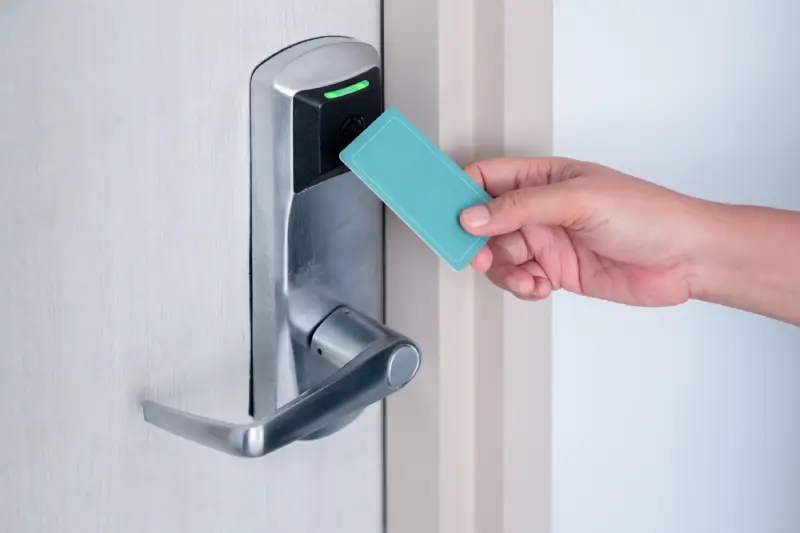
What Is Tailgating Security?
Tailgating security refers to the measures organizations use to prevent unauthorized individuals from entering secured areas by following someone with legitimate access. In commercial buildings, employees, contractors, or approved visitors typically enter restricted spaces using credentials such as key cards, mobile credentials, PINs, or biometric authentication. Tailgating occurs when another individual gains entry without presenting their own authorized credentials.
Unlike forced entry or attempted intrusion, tailgating often happens during normal business operations. A person may hold a door open out of courtesy, assume someone belongs in the building, or become distracted during busy periods. Because the door was opened using valid credentials, unauthorized entry can occur without immediately attracting attention.
Why Tailgating Can Occur Even With Access Control
Electronic access control is designed to verify credentials before unlocking a secured entrance. However, once a door has been opened for an authorized individual, the system cannot always determine whether additional people enter behind them without presenting their own credentials.
This is why organizations often view tailgating as both a technology and behavioral challenge. While access control establishes who is authorized to enter, preventing unauthorized entry also depends on consistent workplace procedures, employee awareness, visitor management, and physical security measures that reinforce credential verification.
Why Unauthorized Entry Creates Business Risk
Every secured entrance exists for a reason. Whether protecting employees, confidential information, equipment, or restricted work areas, organizations rely on controlled access to maintain accountability throughout the facility.
Unauthorized entry may contribute to risks such as:
- Access to restricted operational areas
- Exposure of confidential or proprietary information
- Theft or damage to business assets
- Reduced visibility into who is inside the building
- Workplace safety concerns
- Challenges during emergency response
- Difficulty maintaining accurate access records
While every organization faces different operational risks, limiting unauthorized access remains a fundamental objective of commercial physical security.
Common Situations That Lead to Tailgating
Most tailgating incidents occur because of routine human behavior rather than attempts to defeat security systems. Understanding how these situations develop helps organizations identify opportunities to strengthen everyday access procedures.
Examples include:
- Employees holding doors open as a courtesy
- Visitors entering behind authorized personnel
- Contractors arriving during busy work periods
- Delivery personnel accessing loading entrances
- Multiple employees entering together without individual credential verification
- Shift changes that increase pedestrian traffic through secured entrances
- Reception areas managing high visitor volumes
Recognizing these situations allows businesses to reinforce secure entry procedures without disrupting normal building operations.
How Businesses Strengthen Entry Security
Preventing unauthorized entry involves more than installing security hardware. Organizations often combine workplace policies, employee awareness, visitor management procedures, and credential verification to create a more consistent approach to access control.
Common practices include:
- Requiring every individual to present valid credentials before entering secured areas
- Reinforcing credential enforcement through established access policies
- Implementing visitor registration and identification procedures
- Encouraging employees not to hold secured doors open for unknown individuals
- Reviewing access activity as part of routine security management
- Monitoring entrances during periods of increased pedestrian traffic
- Periodically evaluating access procedures as operational requirements evolve
Together, these practices help strengthen building security while supporting efficient movement for authorized occupants.
Physical Security Technologies That Help Reduce Tailgating
Technology can reinforce secure entry procedures by supporting consistent credential verification and improving visibility around access-controlled entrances. Organizations select different technologies depending on building design, occupancy, operational requirements, and security objectives.
Commonly evaluated technologies include:
- Tailgating access control technologies that require each individual to authenticate before entering secured areas
- Anti-tailgating security solutions designed to discourage unauthorized entry through controlled access points
- Anti-passback access control features that help prevent improper credential use by validating entry and exit sequences
- Turnstile tailgating prevention systems that regulate pedestrian movement through high-traffic entrances
- Mantrap entry systems that limit access to one individual at a time for higher-security environments
- Occupancy monitoring capabilities that help organizations maintain greater awareness of activity within secured areas
- Door held open alert notifications that identify doors remaining open beyond established time thresholds
The combination of technologies implemented varies according to each organization’s security requirements and access management strategy.
Building a Security Culture That Supports Access Control
The most effective tailgating prevention strategies combine people, policies, and technology. Employees, visitors, contractors, and security personnel all play a role in maintaining secure building access by following established entry procedures and respecting credential requirements.
Organizations commonly review access control policies as facilities expand, staffing levels change, or operational needs evolve. Periodic evaluations help verify that physical security procedures continue to support workplace safety, operational efficiency, and consistent protection against unauthorized entry.
Talk to an Honor Security Expert
Comparing Physical Security Methods That Reduce Tailgating
Organizations use different physical security measures to reduce unauthorized building entry depending on facility operations, occupancy levels, and security objectives.
| Prevention Method | Primary Purpose | Common Applications |
| Credential Enforcement | Requires every authorized individual to present valid credentials before entering secured areas. | Office buildings, healthcare facilities, educational campuses, manufacturing facilities. |
| Anti-Passback Access Control | Helps discourage improper credential sharing and repeated credential use. | Employee entrances, restricted operational areas, controlled-access facilities. |
| Turnstile Tailgating Prevention | Regulates pedestrian flow by allowing one authorized person to enter at a time. | Corporate offices, transportation hubs, stadiums, and high-traffic facilities. |
| Mantrap Entry | Restricts access by controlling movement through two secured doors. | Data centers, financial institutions, laboratories, and other high-security environments. |
| Door Held Open Alert | Notifies authorized personnel when secured doors remain open longer than permitted. | Commercial buildings, warehouses, healthcare facilities, and industrial sites. |
Selecting the most appropriate prevention methods depends on building operations, security priorities, access policies, and the organization’s overall physical security strategy.
Frequently Asked Questions About Tailgating Security
What is the difference between tailgating and piggybacking in physical security?
Although the terms are often used interchangeably, some organizations distinguish tailgating from a piggybacking security breach based on whether the authorized individual is aware another person is entering behind them. Definitions and terminology may vary depending on an organization’s security policies.
Can tailgating occur without malicious intent?
Yes. Many tailgating incidents happen unintentionally when employees, visitors, or contractors enter secured areas without realizing that each person is expected to present individual credentials. Security awareness and consistent access procedures help reduce these situations.
Which commercial facilities are most vulnerable to tailgating?
Any facility using controlled access points can experience tailgating. Office buildings, healthcare facilities, educational campuses, manufacturing sites, government buildings, and other commercial properties with restricted areas often evaluate additional measures to help reduce unauthorized entry.
Can visitors accidentally create tailgating incidents?
Yes. Visitors, delivery personnel, and contractors may unintentionally follow an authorized individual through a secured entrance without completing established access procedures. Visitor management policies and clearly communicated entry requirements help reduce these occurrences.
Can temporary workers and contractors increase tailgating risks?
Organizations that regularly work with temporary staff, contractors, or vendors often establish credential issuance, visitor registration, or escort procedures to help manage authorized access while maintaining secure entry into restricted areas.
Are turnstiles the only way to reduce unauthorized entry?
No. While turnstile tailgating prevention is one option, organizations may also implement anti-passback access control, mantrap entry, enhanced credential enforcement, visitor management procedures, and other physical security measures based on their operational requirements.
Does preventing tailgating improve emergency accountability?
Effective access control practices help organizations maintain more accurate records of authorized building access. This information may support emergency response planning, occupant accountability, and facility management during security or life safety events.
How often should organizations review tailgating prevention procedures?
Organizations commonly review tailgating security procedures whenever facilities expand, occupancy changes, access policies are updated, or new physical security technologies are implemented. Regular reviews help verify that access control practices continue to align with operational and security requirements.
Honor Security provides commercial security solutions for businesses throughout Saginaw, Bay City, Midland, and the surrounding Great Lakes Bay Region. If you’d like to learn more about improving tailgating security and reducing unauthorized entry, our team can help you explore commercial physical security solutions that align with your facility’s operational and security requirements.